Nothing makes us grow more than learning. Patrick takes us into his experience over the last Tony Robbins Platinum Partners Finance and Economic Summit he attended, highlighting three major takeaways that impart great wisdom that contributes to success. He shares what he learned about focusing on the positive, finding the balance between certainty and uncertainty, and knowing the emotional cycles that exist in financial markets – from the big to the small.
—
Watch the episode here:
Listen to the podcast here:
Tony Robbins Platinum Partners Finance And Economics Summit
Financial Friday
I’m going to condense my experience over the last Tony Robbins event that I attended. This is a special one. This is for Platinum Partnership, an inner circle group of Tony Robbins and they do it once a year. It’s purely based on finance and economics. He had speakers like George Bush, Clinton, Bernanke, Greenspan, Ray Dalio, T. Boone Pickens and a lot of other professional investors. I’m going to give you my top three takeaways. However, you can look for the playlist or the videos I did. It basically has four videos I did while I was at the summit that goes through in detail some of the things that I was learning. I’m going to highlight the top three. The first one was interesting. This is a big thing that we all can work on and it’s always going to be the case, which is the idea of focus.
This room was filled with successful people in all walks of life. They have a few billionaires in there. I got to talk to a number of people and it’s probably the most high-level group I’ve ever been around, especially the number. There are about 300 of us there. It was one of those things where it kept coming up over and over again. It’s the notion of focus. Oftentimes, how we’re conditioned is we focus on the things that are not going right or we focus on the problems. We focus on the pessimistic side of things as opposed to what we actually can control and focus on, which is what’s going good, what’s going right. What that does is it provides a different state of mind in regards to how we analyze things, how we take advantage of opportunities, how we experience life. Ultimately, the amount of money or success that you achieve, you’re always going to have that instinctive side of you that is looking for what’s wrong. It’s protecting you. It’s looking out for danger so that you don’t get harmed or hurt. What it tends to do is affect our mind that we’re always focused on the negative, the bad, not necessarily the good. There’s always something good going on.
When the focus is there listing things, you’re grateful for or singing out loud a list of those things that you’re grateful for. Thinking about the blessings that you have or thinking about what is going right and list those, it’s amazing what type of mindset that creates. That’s one of those keys to understanding opportunity is that if you have a pessimistic attitude, you’re not going to see opportunity. Therefore, mindset is key. I know that’s general, maybe it’s not necessarily financial but in my experience, it leads to financial. I have dozens of employees. I have lots of responsibility on my shoulder. I’m a parent, I’m a husband. It’s one of those things where there’s always pressures. There’s always something that’s not going as I want. However, there are amazing things that are going on. When my focus is there, my attitude is so much different. I show up differently, I played differently. I experience life differently. Take that as my first big takeaway.
Second is interesting. This is where I’m determining as the balance of certainty and uncertainty, which I’ve talked about before. Here’s an interesting quote and it’s deeper than I thought when I actually first heard it. The quote is, “The quality of your life is in direct proportion to the amount of uncertainty you can comfortably live with.” Uncertainty as he describes it, it’s variety. It’s adventure. Those are some uncertain things. Uncertainty is what makes life exciting, not boring. Uncertainty can also be very negative if you think about it but at the same time, uncertainty is having fun adventures, surprises, roller coasters, going on trips, exploring new places, learning something new, being with new people. Those are experiences that give life a lot of vitality. If everything was the same over and over again, that repetition is boring and we don’t deal with that well.
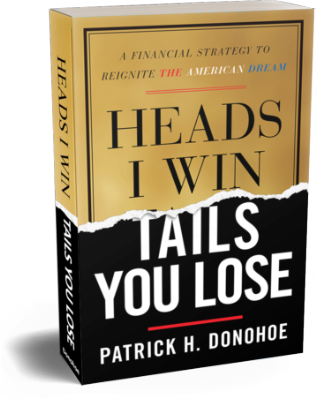
The idea is how do you balance certainty and uncertainty? How I look at it is something that Tony uses, which is looking at your financial life with a bucket mentality. I call it a hierarchy in the book I wrote, Heads I Win, Tails You Lose. I talked about the hierarchy of wealth. It’s a very similar concept where you fill up that first bucket, that safety bucket or certainty bucket and it has assets that we’re not going to lose money. Assets that are protected and insured grow to an extent but also allow you peace of mind so that you can start to experience uncertainty and that variety. You do it in a responsible manner and the uncertainty applies to you but it could be having those adventures, doing vacations, doing fun things with your family. The uncertainty could also be pursuing a different position, applying for a new position, applying for a new job. It’s expanding your resume and being more valuable to your employer or another employer, researching things about yourself. It’s basically doing things that are different than they currently are.
That uncertainty is where I believe that he’s referring to. The quality of your life as you’re taking on these new things and you’re growing and expanding, that uncertainty is essentially reinforced and accentuated by a balance of certainty. That was cool to think through because in the end, we’re all looking for a high quality of life. A high quality of life is not redundant things that you’re doing on a day-to-day basis. It’s doing things that are exciting. The pursuit of that is always going to give this fulfillment and excitement. However, to be enjoyed I look at having a foundation, having an offset of certainty when it comes to your financial life.
Tony Robbins: A high quality of life is not about doing redundant things on a day to day basis. It’s doing things that are exciting.
The third thing was interesting. This was brought up a number of times, which is the emotional cycles that exist in financial markets, big markets but also small markets. Sentiment is vital to understand. It’s interesting how we approach things sometimes because when you’re approaching it as a third party observer, we tend to look at things rationally, analytically. However, when we’re in the actual experience, when we’re not observing, we’re actually in there. It’s more of an emotional game than anything else.
One of the speakers was a manager of I think $100 billion, $20 billion, $30 billion. His name’s Howard Marks. He went through and talked about his new book that’s out I believe. It’s one of those things where you would assume that big traders, whether it’s hedge fund traders or VC funds or whomever, that they have it together and they’re not emotional when you have volatility. He basically made the case that they always are. One of the most difficult things in their world when it comes to investment is making decisions based on fundamentals being in line. However, it’s also adding the variable of emotion. If a certain emotional state is not present, that could be a no buy or a buy signal. It’s interesting. I think we’re in this euphoric state where people are bidding up and buying for the sake of it.
An example that they did at this event was they bid up the price of $100 bill. This is a room full of successful people and Tony made the claim, “Who are my risk takers out there? Who are my ballers out there?” A couple of people raised their hand and he auctioned off a $100 bill. Somebody offered a $150, $200, $500, then it got to a $1,000 then $5,000. Here’s the catch, the person that bid the highest had to pay and got the dollar bill but the runner up didn’t get the bill but still had to pay. It was fascinating. The bidding got up to $50,000 and then $100,000. The $50,000 guy had to pay same with the $100,000 guy but the $50,000 guy didn’t get everything.
I want you to look at going from $50,000 to $100,000 the guy knew it’s a lot of money but then he didn’t know how much the $100,000 guy was going to bid after that. It could have gone to $1 million. It’s one of those things were in the actual mix, the emotions, the stuff that’s going on in your brain is not rational because the rational thing would have been not to bid more than $100 for a $100. Have your experiences some other way. These guys may have been the billionaires in the room. I have no idea. All of the money went to charity but regardless, I would rather not have that experience and paid $100,000 for that. There would be way more beneficial than that.
My point is this is where emotions come into play. With where our world exists, there is a certain emotional state collectively when it comes to assets being bid up, whether it’s real estate assets, whether it’s commodities, whether it’s stock. It’s an emotional game. The emotion is nonsensical from a more greed standpoint or fear of missing out standpoint as opposed to a sell-off, “I’m running to the hills.” Those are two different emotions. Howard Marks does a great job of talking about that emotional cycle.
This is one last thing as we get into this idea of the emotional game, which is something they made me think. I’ve looked at the fundamentals of our economy. I look at how much debt is out there, how much productivity is out there, which is not that much at all. Peter Diamandis, this guy is one of those thinkers. He went 10:00 at night, three hours long and his energy level is high as could be the entire time. It was fascinating and he talked about so many different subjects. I cover some of them on the video that I mentioned. Peter made the case that life in the next ten years, there’s going to be more economic growth, more prosperity than the previous 100 years combined. His argument was how quickly technology is growing but also the exposure to societies and markets that are not online.
The statistics are showing 4.5 billion people will be online in the next ten years. It’s fascinating to think of it, whether it’s India as an emerging market. Africa is an emerging market. China is the same thing. In the Middle East, it’s the same thing. It made me think about what my frame of references when it comes to, whereas an economy with productivity is like. What are our debt situation both short and long-term is like? What’s going to happen as a result? I don’t play markets, but at the same time, I’m curious because the markets are part of our life. They fund the companies that we all use. Looking at consumer sentiment when it comes to being alive, it’s going to be interesting to see what the next ten years hold.
From a transportation standpoint, from a communication standpoint, our lives are going to change quickly and it’s exciting to me. At the same time, it could definitely be disruptive to whether it’s companies, economies or governments. Looking at that, whenever emotion is high, especially fear and running to the hills, that’s where all the opportunity exists. The last thing I was going to talk about is Ray Dalio. Ray Dalio runs one of the biggest hedge funds in the world. The minimum investment you can make with him is $1.5 million. He’s done very well for himself but what’s interesting is his thoughts in regard to economic cycles.
He has some theory associated with economics and the best way to handle so much progress when it comes to technology and potentially the employment situations we can find ourselves in, where technology is going to take over a lot of employment. He has some amazing thoughts there. Those are on the videos of on YouTube. There are four of those videos. Go check those out. Research Patrick Donohoe in there or Paradigm Life, put The Wealth Standard and that should pop up. There are four of those, it says Tony Robbins’ Platinum Partners, day one, two, three and then day four and five. I hope you like them. Thanks for everyone.
David Stockman is an American politician and former businessmen who served as a Republican US representative from the State of Michigan from 1977 to 1981. He is the ultimate Washington insider-turned-iconoclast. David reveals some of the secrets that politicians tend to hide while sharing the milestones in his life that brought him to understanding markets, the economy, fiscal policy, and monetary policy. He takes us back to the events that changed the economy in history to that of the financial crisis in 2008, sharing what he understood about Wall Street and how things came to be from then on. Tying it up to the issue at the heart of capitalism and the prosperity it creates, he talks about the markets and creative destruction.
—
Watch the episode here:
Listen to the podcast here:
Understanding The Markets, Washington, And The Economy with David Stockman
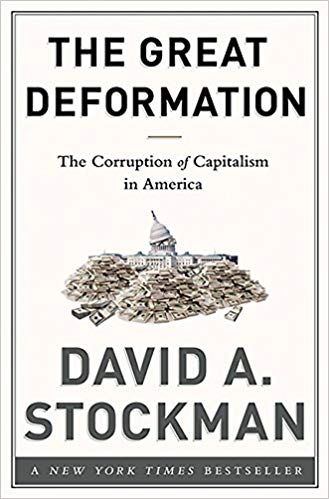
The Great Deformation: The Corruption of Capitalism in America
I have the pleasure and the honor to have David Stockman on with me. David, welcome.
I’m happy to be with you.
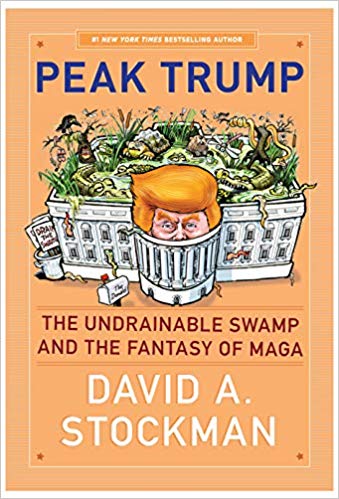
For those of you who don’t know David Stockman, he is an American politician and former businessman who served as a Republican US representative from the State of Michigan from 1977 to 1981. He also served as the director of the Office of Management and Budget under President Reagan. David is the ultimate Washington insider turned iconoclast. He began his career in Washington as a young man and quickly rose through the ranks of the Republican Party to become director of the office that under President Reagan. After leaving the White House, he had a career on Wall Street. You’ve had quite the experience, David. You also authored an incredible work, which I would say a treatise of what your principles really are called The Great Deformation: The Corruption of Capitalism in America. You also have a book that you just released, Peak Trump: The Undrainable Swamp and the Fantasy of MAGA.
David, thank you for your work over the years. I’ve followed you for a long time. The empath in me cringes sometimes and I see you on TV trying to advocate principles of liberty, principles of free market and certain monetary policy principles, fiscal policy principles. It doesn’t seem to get through. Honestly, it says a lot about who you are that you continue to advocate for principles you believe in despite the resistance you get most often. Give the audience an idea of what are the milestones of your life that brought you to the point where you understood what you do about markets, the economy, fiscal policy and monetary policy.
You summarized my career at length. Half of the time I was a politician and half of the time, I was an investment banker on Wall Street, so I never had an honest job in my whole life. I learned something big during that two-phase career and that is about debt. Washington loves debt because you can keep the can down the road and put the cost on future generations and pretend that the interest carry is not all that bad and you can get away with. There are no offsetting institutions and principles that mitigate against that. You’re going to end up with a $22 trillion national debt that we have. As I show in my new book, Peak Trump, we’re heading for $40 trillion before the end of this coming decade and that will be just a devastating burden on the economy. As near as I can project, it would amount to about 140% of GDP. We only know of three economies that have more government debt than that are Japan, Greece and Italy. It doesn’t bode well for where we’re heading, especially because we have this oddity in our demographics here in America and that is the Baby Boomer. It was a giant aberration in terms of the number of babies that were born in 1946 when I was born.
In 1962, there are 80 million people. If you do a little math, you’ll realize that all of them will be retiring in the 2020s. In the early 2030s, they’ll be hitting the Social Security trust funds and Medicare and a lot of the other so-called welfare state supports massively just in terms of numbers. What politicians don’t let you know or maybe don’t even know and don’t acknowledge is that it’s a built-in Ponzi scheme, Social Security and the rest of the welfare state. They build in higher and higher real benefits over time relative to what people earn during their working career and put into the trust fund. It’s nothing like insurance, it’s nothing like actuarial balance. It’s a Ponzi. If you have this debt already baked into the cake and you have the demographics baked into the cake and then you have this escalation of real cost per beneficiary, you’re in big trouble. That’s what the politicians have ignored. Wall Street used to know a lot better. Back in the ‘50s, ‘60s and the ‘70s, you had a decent level of prosperity. Wall Street understood a little bit about what sound money was in what fiscal rectitude was.
If you got heading off the deep end, it happened in 1967 or 1968. It was Johnson’s, Guns and Butter. It’s the Great Society on the Mekong River. It was a disaster, but finally, Wall Street rose up and said, “You can’t do this.” They forced Johnson to raise statutes to balance, which is out of control. William McChesney Martin who was the chairman of the Fed at the time believes, “You can’t print your way to prosperity.” We were on the grades and we had a recession and people learned their lessons. I say all this because after 1971, when Nixon took us off of the gold standard, it was mainly nothing to do with the magic of gold. It had to do with discipline on the central banks and the financial system. It’s accountability and discipline. You couldn’t create credit and money at will in any quantity. That went away and it took a little while for people to realize that we were on a total fear system and nothing could stop the central bank if they want to print like crazy.
Wall Street learning to love money burning because, in the short run, it helps to inflate financial assets. It made interest rates lower. It made capital rates and our P/E multiple times and everybody lived happily ever after except Main Street. Here is the point where the rubber meets the road. Since Greenspan took over the Fed in 1987, we had been off in something I called bubble financer Keynesian central banking. In which we’ve had tremendous booming prosperity on Wall Street and increasing stagnation and flat-lining failure on the Main Street. Let me give one statistic on that and then we can move on because it summarizes what I learned through my years in Washington and in the second half of my career in Washington. If you go back to the days right before the great crisis that shook the rafters in September 2008, everybody thought the world was coming to an end. If you look at where Main Street was as measured by industrial production and that’s everything. That’s manufacturing, that’s energy, coal mining, oil shale and all the utilities, gas, electric, water. It’s a fundamental measure of output on the Main Street economy.
The reason I dwell on it is that if you go to the level that existed in November 2007 and compare it to where it is now, we gained 3% in the last eleven years. That’s the same thing. If you divide that out by eleven years, you might as well fall flat. Look at where the NASDAQ-100 was on November of 2007. NASDAQ-100 is the leading edge of the casinos or the stock market. You take the inflation out of it. We’re talking apples to apples here because of the industrial production is physical and it has inflation in it. On an inflation-adjusted basis, the NASDAQ-100 last fall peak up to 200% and Main Street production output is at 3%. That doesn’t make any sense because often the price of equities and other financial assets reflect the output and income capacity and growth of Main Streets. What we have is a totally bifurcated economy on unbelievable prosperity down on Wall Street and that’s a great bubble that’s gearing the labs.
Trump made a mistake of embracing it. The stagnation and increasing resistance to growth on around Main Street because we have so much debt. We can get into that but the amount of debt, not just on the government sector that I talked about, but also in the business and financial institutions, add up in total to $70 trillion, which is three and a half times net income. I don’t think that stable is sustainable, but it does mean that you’re lugging so much debt that growth becomes harder and harder. That’s also why we woke on a ten-year rolling basis. Our real GDP growth rate now is 1.5% compared to 3% to 4% back in the heyday before 1971 when Nixon took us down the path we’re on. That’s some big-picture views that I put together and assess over my years in Washington and then on Wall Street.
The first thought that comes to mind is I think it did work relatively speaking for bankers over the last years. At the same time, if you look at the fundamental side of things. I don’t think most people understand the fundamentals. If you will dig to look at what occurred 2008, it started with Greenspan and what he started to do, especially with the dot-com bust. It comes down to the artificial influence of markets because markets are supposed to be a clearinghouse. If you look at profit and you look at capital and you look at valuations, you buy companies that are profitable, that have good cashflow and that have good fundamentals. You don’t buy those data. They’d have poor operations and poor balance sheets and poor financial statements.
If you look at what has been done is the injection of capital into society. It has artificially increased the demand and the flow of capital into businesses. That’s why a lot of the bond issuing by corporations to buy back their stock is just one example of that manipulation. It’s not understood from the average American’s perspective because they don’t have this background in economics, unfortunately. A lot of the stuff that’s happened has been, not necessarily behind the scenes. What’s occurred into the narrative around it that you explained is that this is a good thing. That we’re here to save the economy, we’re here to bail out banks and we’re here to do this and this for your benefit, but ultimately it was just to the benefit of them.
Peak Trump: The Undrainable Swamp And The Fantasy Of MAGA
This is where I want to get into the idea of capitalism and economics. I interviewed a guy who wrote a book called The Coddling of the American Mind. The book is about the higher education system and how free speech has gone from one side of the spectrum where the epitome of free speech and now it’s the complete opposite. The Coddling of the American Mind is trying to protect those from emotional harm than anything else. What it does is it robs people of the experience of figuring things out on their own. The point of capitalism and economics fundamentally is to have a system in where things are innovated and solutions come up. People are able to express themselves through capital and through resources, but if they fail, they’re out of business or they learn. That’s ultimately been completely removed from the equation in most cases and has created what we have now.
In terms of the things I look at, I don’t pay that much attention to the way that they’re paddling all the snowflakes on college campuses but I totally understand that. At another level, at the level of the macroeconomy and Washington policy and Wall Street, it’s the same thing. Wall Street wants to be cargo. We saw the Christmas Eve and they had a hissy fit because they finally said, “After eight years of negative real interest rates, the money market rate, the Fed funds rate is less than inflation for eight years running.” They finally said, “We’re going to normalize interest rates. This big bloated balance sheet we have that inflated with stock and bond market is going to continue on automatic pilot.” That’s what follows it. They have a hissy fit and the next thing you know, it does a U-turn. The Fed-heads are out there singing about, “We can be patient. We can defer delay.” I said, “What are they thinking about? They have been deferring for ten years.” We’ve had unreal Central Bank policy. Go grab this balance sheet level and it’s manipulation of interest rates in the yield curve. Yet, we get just a modest correction or wakeup call a couple of weeks before Christmas Eve. At the big sell-off on Christmas Eve, all of a sudden, all the crybabies on Wall Street are asking for their safe room.
If you go back to 1970 or even the mid ‘80s, when I left Washington, the Reagan administration when I was budget director and I joined Salomon Brothers, which was a rough and tough place then. It was run by John Gutfreund. He was called the king of debt. It was a huge trading house with all debt securities. You didn’t see this snowflake attitude on Wall Street. People expected that there were going to be cycles. That they were at risk if they’re going to chase the latest and greatest stock bubble phenomena. There was no presumption that if there’s a big meltdown, Wall Street would be bailed out or that we would get to a situation like 2008 when Morgan Stanley was insolvent. It should have been forced into Chapter Eleven. Merrill Lynch was insolvent, it was put into a shotgun marriage. The Bank of America didn’t want to buy Merrill Lynch, but they were forced but it and Merrill Lynch should have gone bankrupt. Frankly, Goldman Sachs could have gone bankrupt as well. All of them were way over their skis with all kinds of sticky, risky, long-term assets that they were funding with overnight money. The panic came in, the overnight money dried up. They faced over putting crisis they couldn’t get out of and the market should have been allowed to work.
What I said in my previous book, which I think still is a lesson that’s been lost because we’ve had this phony stock recovery. The recency bias obscures everything that we allegedly learned back then. What I showed is, there was no danger of a meltdown in the banking system on Main Street. There were no lines with the banks other than a few high that were in the subprime mortgage business that should have gone out of business anyway. The key point is the bailouts were of the big Wall Street gambling houses. It wasn’t of the banking system. We should have allowed the crisis to burn out in the canyons of Wall Street. All those firms who will be gone on there, they would have been reorganized. The same people that were running them, then we’ll be running the reorganized Wall Street now. All of their phony wealth had been built up and now consist of some realistic appreciation about the danger of too much debt and risk and too much gambling down in the canyons of Wall Street, but none of that happened. If we did the snowflake thing, Wall Street will go to all these banks, the same way with the car companies and a lot else in the US economy. As they say, it was a wasted crisis.
We did nothing but double and triple down on what Greenspan had already been doing, which was bad enough. Now the Central Banks led by the Fed have painted themselves into a corner. Let me just give one little illustration of how aberrant all this is. If you listen to what I call bubble vision and let’s say CNBC are both the same, you would think that everything is normal and stable and will forevermore be when in fact, we’re in a giant crazy experiment. Anybody who looks at it objectively with historic notions of sound finance and financial discipline will say, “What are they doing?” On the eve of the Lehman bankruptcy, September 15, 2008, the balance sheet in the Fed was $138 billion. It had taken 94 years from when the Fed opens its doors in 1914 to build that balance sheet off into Ohio State and test and business cycles and so forth. It had taken 94 years to build that up. Even then, it wasn’t perfect and you were creating separate bank credit out of thin air. In the next 94 days after Lehman went under, Bernanke and his merry money creditors at the Fed created 145% more balance sheets in 94 days that all their predecessors had gone into previous 94 years. They took the balance sheet and earned $30 billion to $2.2 trillion in 94 days.
After they had supposedly rescued the economy when the only thing they did was suspend the laws and supply and demand and financial discipline. After they’d done that, they kept on going and they invented Q2 and Q3 and the twist and other central bankers baloney. They eventually took the balance sheet to $4.5 trillion. That means that in roughly nine to ten years, they create $3.5 trillion of Central Bank credit out of thin air and pumped into Wall Street. That caused the price of bonds to soar because of all of this artificial demand from the debt. They paid for it with something for nothing digital credits made out of thin air. When the bond markets soared and long-term interest rates went lower and lower beyond the 1.35% here and even lower abroad, that’s the capitalization rate for all financial assets. When the long-term interest rate gets pushed down before the board, the P/E rate or the price-to-earnings ratio is the inverse of its source for equities. The stock market waves off and then you get all kinds of financial derivatives, options and futures and the whole rest of the complex going for a huge ride.
They didn’t fix anything. They violated even more laws than anybody had done before and get on the financial laws. They created with the third-grade bubble of this century that we’re in right now. I want to relate this because I don’t think it’s sustainable. I think we’re going to have an even bigger and more thundering crash for some reasons that we can get into. The reason I call my book Peak Trump is that Trump, for all his defects and lack of preparation and know-how to do the job that he was running for, at least he called it one big crowd ugly bubble during the campaign. When he was elected, the S&P 500 was 21.40. Fast forward to two years, the peak was 29.40. The problem is that big fat ugly bubble now became the trance of Trump and economics. It was a huge mistake to embrace that bubble in the economy that went with it because they’re both going to go down for the count. They’re going to splatter over the White House and Donald and all the rest of it and we’re going to be in for big-time crisis in the years ahead.
What keeps circling through my mind is it’s like a violation of the principles of humanity or behavior. We’re here having an experience of life and we learn by going through difficult things and learning how to make decisions and being responsible and being self-reliant. That cycle happens throughout our entire life. Going to the example I was using, it’s evident that the higher education model, the coddling of a mind, ruins and destroys the mind. It’s not allowed to have the experiences that form their perspective, their intuition, their opinions and figuring things out using a rational brain. It’s the same thing monetarily where you had these companies and you also had influences that failed, yet you didn’t allow them to fail and it magnified the problem.
It’s not even making the problem worse. It’s worst times two because now they didn’t learn and they’re going to just keep using the exact same behavior that they used before. Now, it’s a much bigger problem and it affects the whole world. It’s not the US. This has gone through the entire world. What happened is it’s on the backs of the American people. The citizens meet Main Street as they are called, but the unfortunate thing is that the majority of people don’t know what economic policy is and monetary policy. They’re just following what the status quo has been for the last 30 or 40 years. The unfortunate thing is that we’re past the point of no return as far as having to learn a lesson the hard way. That’s part of making mistakes. It’s a little difficult in the transition and it’s unavoidable. I agree with you. It’s a matter of time. That’s just one of those things where it just keeps sputtering along and people were like, “If I believed you or if I stuck to the fundamentals and principles ten years ago, then I wouldn’t have made any money.” What the view is right now and one of the things where in hindsight, the lesson is always learned. It’s never learned in foresight.
This gets to the issue of the heart of capitalism and the prosperity that it creates, is the money and capital markets. That’s where the financial flows crisscross. That’s where capital is raised. That’s where savings are put to work. You need very honest, efficient and discipline money in capital markets. If you have those, it will spread out to the rest of the GDP and the Main Street economy. The great trade market economist Joseph Schumpeter has this concept of creative disruption and that’s all capitalism progresses. Buggy whips go by the wayside and you get a horn on your automobile, your Ford, your model-T or whatever it is. That is important, but creative disruption is not working efficiently and productively if the financial markets are falsified by central bank manipulation and intervention. When they’re falsified and you get stock prices that are way too high, people are rewarded for doing the wrong thing where they should be doing something else.
I use this as a way of working up to Amazon. Amazon is turning the retail world upside down. It’s an amazing machine. In some ways, created a destruction like there’s never been before, but the stock market is so out of control because of the central bank manipulation that Amazon is drastically overvalued. It doesn’t produce any profit. The profits that you make are nothing to do with that big eCommerce business, the profits that may come out with the cloud business and that’s a tiny piece of it. The people running Amazon from Jeff Bezos are being told, “Don’t worry about pricing for profits, simply price for expansion, a price for sales growth or price in order to destroy the next industry that you decided to penetrate.”
The Markets: An artificial influence is always going to create unintended consequences.
It trades off and on at 150 or 200 times income. It trades multiples of cashflows that never made any sense of history. As a result of that, we’re not getting just creative destruction, we’re getting just pure destruction where it’s all these empty malls and all these failing retail chains. All these people whose livelihood was invested in the bricks and mortar retail sector are being prematurely thrown overboard or impaired and injured. Amazon is going too fast because Amazon is way overvalued. These are maybe worth the peak, but if the company were valued rationally and a preset template or preset type of machine, it might’ve been worth $5 billion.
At $5 billion, he would have one kind of business model and growth strategy, a modus operandi for Amazon and $150 billion is one that is something totally different. All the people who work for it will have some piece of the action in the stock options and so forth. If you take that example and you multiply it over and over by hundreds and thousands of times and we’re getting all kinds of bad signals to all our economies. People are making bad decisions and at the end of the day, they’re going to meet less growth, less prosperity, lower living standards and more trouble down the road. The worst case is the signal for Washington. If you tell the politicians and I was one of them for more fifteen years so I understand the mindset. If you tell him that you can borrow almost unlimited money at less than 2% interest, they’re going to borrow as if there’s no tomorrow. They’re going to say, “Debt spend is bad things. How many will get to the deficit in the volume buy?”
We’ve been kicking the can for 25 years and it’s because they have been totally mis-signaled and misled. The reason I know that’s true is that I was there. When I became the budget director in January 1981, the tenure bond rate is 16%. The 30-day trade rebill 20%. Our mortgages were up in the high tens and the bank rates are up for pushing 20%. In that environment, the deficits and debt scared the hell out of politicians because at least they could do the math. If you borrow $1 trillion and you’ve got a 15% bond yield, that’s $150 billion a year of interest you’re going to have to pay. It’s going to squeeze out your favorite book or project for education or some do-gooder thing that all the politicians glom onto. Some favorite war has happened to the warmongers so they’re either domestic do-gooders or foreign warmongers, but they want money and they don’t want to have to spend it on interest so they get reasonably disciplined or prudent fiscally if there are real interest rates.
We can call it price discovery and we can call it honest pricing, but the systematic effect are in central banking. I used the word because it means they’re trying to run the economy on the theory that capitalism was a total failure on its own. We’re constantly stumbling far in the recessions, depressions and all kinds of organizations, which is total baloney but that’s the view. Therefore, they’re in the middle of what I would call the central nervous system of capitalism. It’s Wall Street. It’s the financial markets and they should get out of there. They should let interest rates find their own level. Let supply and demand clear the market. If the stock market gets all enthusiastic, let there be a couple of crashes and let a few people be carried out on their shield. By the way, we have the greatest prosperity known to man. In 1870 to 1914, real GDP growth of 4% per year on average for 44 years. There’s nothing like it since and we had no central bank. We had nobody saying what the interest rate should be and we had nobody targeting GDP or the equation rate or anything else. We had just capitalism well.
It all comes back to that principle of accountability. When you have signals or you have influences, it’s an artificial signal. It’s an artificial influence and that always is going to create unintended consequences and they’re everywhere. You mentioned some empty malls and so forth. I’m not going to argue that Bezos or some of these tech guys have created value because they have, but at the same time, what value has been destroyed somewhere else? If I look at my local economy here where I’ve had a hard time trying to hire people over the last two years because there are hundreds of tech companies here now and they are not profitable. They price everything with tremendous amounts of VC funding or private equity funding and I can’t afford the developers. I can’t afford the project managers. It’s insane how much wages have been pushed up.
That’s one of those things where it seems good on some measurements because of what artificial demand is doing. At the same time, you’re not looking at the unintended consequences. I don’t think a lot of those consequences have manifested. On paper they have whether it’s a default of automobile loans, whether it’s the student loan bubble. They’re yet to manifest, but those are going to be some of those signals like, “Maybe it was good over here, but look at all the crap and chaos it caused over here.” That’s where I would say that difficult time is ahead of us. We all have it in our prayers that hopefully at this point, they understand the fundamentals of it and make the right decisions. You can’t just keep deferring the fundamental issue. The fundamental issue is you use debt to manipulate behavior, manipulate prices and manipulate growth and it wasn’t true growth. That’s what hopefully people will get, but time will tell.
You’re getting right to the heart of the trouble with bubble finance. There’s a lot of hidden rot in the financial and operating economy as the bubble gets larger and larger. People don’t see it either because it’s a new phenomenon or because there’s a suspension of disbelief. There’s been such a huge boom in the total value of the equity market and the bond market together that it’s generated enormous amounts of investible venture capital. Now, venture capital is flowing in tens of billions of investible funds. They’re looking for every top of maybe startup they can find and they’re all being funded. These are what I call burn babies. They are not paying the rent and the lights and the payroll out of revenue, they’re paying it out of venture capital. We’ve seen it before but this time it’s going to be the worst ever.
When the market goes into a big correction and the venture capital world dries up and freezes up and there are no third, fourth, fifth rounds or new fundings, all of a sudden, all of these burn babies out there are going to run out of cash. They’re going to turn off the lights, nail the door shut, get out of dodge and it’s going to cause a huge negative sucking sound. Voices like Brooklyn or Silicon Valley or Austin, Texas or a lot of others. For instance, take my favorite, WeWork. If there was ever a poster boy for the insanity of the current bubbles, it’s WeWork. They raised billions of dollars in the junk bond market and elsewhere to buy fixed office building assets that have a long life of 40 years or to lease them on long-term leases and to improve them will all kinds of fancy gigs. They attract people to come in and they’ve got all kinds of flavored coffee and all the rest of it there. On the other side, their tenants are on one week, 30-day or three-month leases. That is the most mismatch book in human history and it would never see the light of day if you have financial discipline. When the money is flowing in unlimited ways, the risk is totally ignored. You create a ridiculous oddity aberration like we were.
I’ve been to WeWork and they’re cool. They have a cool office space. It’s open. It’s a cool concept. I’m not saying that they’re not creating value, but at what price and what’s the consequence of how they’ve done it. That’s the point you’re trying to make. There are good sides to it, but nobody ever focuses on the bad and what the consequences are. It’s super convenient to order stuff from Amazon instead of having to go to the store. At the same time, it’s like, “What is that done the way in which they’ve been able to fund that and do that?” The consequence of being able to do it in the way they’ve done it hasn’t necessarily been manifested yet. That’s going to be worse than having the benefit of what they offer as a product.
I’m not pointing that WeWork is a bad idea. It’s a great idea but it can mismatch your work. You can’t be writing twenty-year leases on one side and day-tenancies on the other side. If you want to do it that way, then you’ve got to charge your tenants in the arm and the leg so you build up reserves. When the next downturn pumps, half the people occupying desks in WeWork are going to be gone. They’re going to be ionized because they’re burned babies. They have no revenue, they have no profit and they have no reason for being that only if they could raise capital because at the moment, anything goes. Now, you get a half-empty office building on twenty-year leases and all your tenants are disappearing or bankrupt. You’ve got a mess.
The Markets: The ignorance of individuals has been preyed on. Ultimately, we’re the ones who are going to have to pay a big share of the price.
I have one final question for you. If you had 60 minutes inside of a room of your choosing with Alan Greenspan, Ben Bernanke, Janet Yellen and Powell, what would be some of those first questions you would ask them or statements you would make to them?
For me it wouldn’t last very long because I would say, “You’re dead wrong and you’re not needed.” The idea of activist central banking and setting every price on the meal curve from overnight to 30 years, which directly or indirectly they attempt to influence. This idea of a Central Bank board is counterproductive. It’s negative and it’s not needed. We should go back to the banker’s bank that was created in 1940. You’ll see a legal Fed to buy any government debt, not bonds or anything. It did not have any mandate of full employment or 2% inflation. It was simply meant to be a backup source of liquidity to regional banks. Liquidity was to be provided to commercial banks only if they presented sound collateral based on receivables or finished inventory that could be converted to cash. What you need are central bankers where they would pair green eyeshades that could work through balance sheets and financial statements and determine whether or not the collaterals that are being brought to the window is sound and mostly loanable. We didn’t need Alan Greenspan and we didn’t need Ben Bernanke and his PhD and all these ridiculous models that they used. We didn’t need any of that. We need good accountants and lending officer. I would say, “We don’t need you but thanks for your service.”
It’s one of those things where they have this iconic status it seems. I look at the core and root of the problem and the unfortunate thing is the awareness that people have regarding monetary policy and the role of a Central Bank is nonexistent. It’s going to take some hard times for people to wake up. That’s behavior in general. When you start to experience pain, you’re like, “I don’t like that. I should change what I’m doing to get the pain.” That’s when change happens. As a society, it’s unfortunate that the narrative that we’ve been fed for the last 30 years is that all of this is good for us. That’s the saddest part. The ignorance of individuals has been preyed on. Ultimately, we’re the ones that are going to have to pay a big share of the price, but time will tell.
It’s bad and it’s also good because they put their credibility on the line. They said they fixed everything. We know what we’re doing. We need a monetary policy and geniuses on the Federal Open Market Committee and we’ll make everything better. When this bubble collapses, they will not be able to rescue the market. People are going to lose trillions of dollars. They’re going to be mad and angry. Some people are going to be totally financially ruined and there is going to be a day of reckoning then maybe the way will be open. We understand this to tell the American public. We don’t need this massive central bank intervention. It’s got to be house clean with echoes building and a totally curtail back to its original mission. There’s a chance that it could happen, but it will be painful getting from here to there.
David, thank you so much for your time. This has been a fascinating dialogue. I appreciate you teaching me and teaching the audience. What’s the best way we could support you? What’s the best way to follow you and see what you’re up to?
If you’re interested, I have a daily blog. You can Google it and sign up. It’s a modern subscription-based service or you can read my books. My newest is Peak Trump: The Undrainable Swamp and the Fantasy of MAGA. It’s important to understand what’s going on right now because we’ve all been totally misled by all the boasting and bragging coming from the White House about the Trumpian economy. It’s a house of cards and a house of debt.
Thank you for what you’re doing. Thank you for your service. We’ll talk to you next time. Thank you, David.
David Stockman is the ultimate Washington insider turned iconoclast. He began his career in Washington as a young man and quickly rose through the ranks of the Republican Party to become the Director of the Office of Management and Budget under President Ronald Reagan. After leaving the White House, Stockman had a 20-year career on Wall Street. He is the author of The Triumph of Politics (1986), New York Times best-seller The Great Deformation (2013), TRUMPED!: A Nation on the Brink and How to Bring it Back (2016), and most recently, PEAK TRUMP: The Undrainable Swamp and the Fantasy of MAGA (2019). He is the editor of David Stockman’s Contra Corner: http://davidstockmanscontracorner.com.
Love the show? Subscribe, rate, review, and share!
In this second part of Financial Friday, we are still with wealth strategist Will Street as we move on to talking about the pursuit of financial certainty and happiness. We examine a scintillating article published by the Business Insider, detailing a woman’s insight by studying 600 millionaires on the effects of where you choose to live to building wealth. We discuss the importance of putting one’s happiness and where they find meaning in life to the equation of wealth-building. Learn how to balance financial certainty and security with real life, taking into account friendships, family, and environment. Know that we don’t have to give up the enjoyment of right now to the mirage of the good life in the future.
—
Watch the episode here:
Listen to the podcast here:
The Pursuit Of Financial Certainty And Happiness with Will Street – Part 2
Financial Friday
We are in part two. We started with part one last episode. We’re going to continue with a scintillating article. I’m here with my friend, Will Street. It’s an interesting article from Business Insider. It is the insight a woman had by studying 600 millionaires and she discovered where you choose to live has two effects on your ability to build wealth. First off, we’ll recap the last episode. What did you think of the last episode? How did you like that discussion?
To recap it a little bit, it was good because we talked quite a bit about building wealth in the right way and building it from the base up and talking about uncertainty. Where a lot of people go wrong is they thirst after this uncertainty, but they seek it out without having the proper foundation in place. Not every financial decision is going to pan out. If you’re out and about in search of success or financial freedom or whatever that means to you and when you come across one of those scenarios where it doesn’t pan out. If you don’t have the right foundation to fall back to, that’s when things become difficult for people. You shared a couple of examples of some of those failures, the Puerto Rican fish farm. You got to do the due diligence. Things aren’t always going to work out. In fact, often things don’t work out exactly according to plan. The best that you can do is put yourself in a position to weather the storm and to have the right type of foundation, the right base and to keep moving forward.
The other point that you made that I thought was super compelling was this idea about tier two. We used as examples a couple of tier two assets, real estate investments, starting a business. The investment in ourselves and finding something that drives us. Finding something that gives us purpose and meaning and the value that it brings as we feel that sense of drive to get out of bed and make it happen. If that’s what is driving us, more often than not, we’re going to have a whole lot more in the tank to be able to push forward and be successful.
It’s the distinction between escaping. Most people are pursuing retirement, which is the escape of what they’re doing because they wouldn’t choose to spend all of their time working in what they’re doing. They’d rather spend their time somewhere else. They’re trying to escape from that. We advocate the discovery of doing meaningful things. I referenced some Tony Robbins material that says that the most fulfilling life comes from discovering that meaning and then spending 50% to 60% of your time doing that, not all of it. That’s where you look at people that retire and are miserable or people that achieve tremendous wealth and then decide to take their own life.
Where that true, that core meaning wasn’t discovered. Money or success or something else they thought was going to help them to discover it, where it’s the other way around where you can discover it without achieving wealth. This is something that’s not talked about when it comes to financial planning or financial advice or what you should do with your money and I think that it’s a tragedy. Most typical retirement planning solves for a specific end, which I don’t think is the end that people are seeking. Let’s get into some typical financial advice by a woman who studied 600 millionaires and she discovered where you choose to live has two effects on your ability to build wealth.
Here are a couple of her claims. She says the key to wealth building is to live in a home that one can easily afford. If you live in a pricey home and neighborhood, you will act and buy like your neighbors. The more affluent the neighborhood, the more the residents spend on almost every conceivable product and service. If you’re high income-producing, high-consuming neighbors roll up to the driveway in a BMW or a Mercedes-Benz, it’s likely you’ll feel the urge to do the same. The pressure to keep up with the Joneses can also be affected by lifestyle creep. The tendency to spend more whenever one earns more. First off, let’s take her perspective. What is she saying? What is she trying to allude to when it comes to a person’s ability to build wealth?
The common expression that you hear is somebody who’s house-poor. She’s saying, “Don’t be house-poor. Don’t spend or don’t buy a house that uses up more than a certain percentage of your disposable income. That’s a term that is somewhat familiar is this idea being house-poor. That’s the first piece, the size of your mortgage relative to your income. The second is if you live in this neighborhood and you see the neighbor across the street rolled up in a new 7 Series BMW, my 3 Series is not adequate anymore. I need the 7 Series. I need the S-Class Mercedes. I can’t resist that urge. If I see that my neighbor has something that I don’t, I’ve got to keep up with him or her. We’ve got home automation, swimming pool in the backyard, we’ve got it all. Pickleball court is the latest. “My neighbor’s got the pickleball court. I need the ball court. I’m going to spend it, even if it means I’m spending now what I would otherwise save.”
One of the natural tendencies we have as humans is we value community. We value friendships. We value relationships. If you live in a certain neighborhood, you want to be a part of that. I don’t think there’s anything wrong with it. She categorized that the wrong neighborhood, then you are most likely going to spend more than you make and you’re going to get into financial trouble. That’s what she’s alluding to. You’re not going to save and then you’re going to affect your future or ruin it, or both. Consider billionaire investor Warren Buffett. He lives in a modest house worth 0.001% of his total wealth. This is a commonly held perspective. I understand the accumulation of wealth. If you spend less, you’re going to accumulate more. It’s hitting on the financial principle, not the lifestyle and the meaning behind where you live and the memories and the experiences. It approaches it from a purely economic standpoint.
Financial Certainty: Your home is not an asset because it does not produce cashflow.
The thing with economics is it doesn’t take into consideration human behavior. She’s saying that human behavior, you’re going to spend less and you’re going to have more to accumulate. Is there anything that’s lost? This is where we’ll pivot to the other side of the coin when it comes to home ownership, the home that you live in. I’ve heard it as your home is not an asset. Robert Kiyosaki talks a lot about that because your home doesn’t produce cashflow. Someone else isn’t paying your mortgage, you are. You’re putting money into the maintenance and you’re putting money into upgrading this and upgrading that. You have to have Mercedes-Benz and BMWs. I look at the value of living in a nice neighborhood, the value of living in a nice home and what value that provides you when it comes to lifestyle, meaning, memories, family, etc. What do you think of the other side of the coin? How could you say, “I see what you’re saying, but here’s another opinion?”
I see what you’re saying is this idea. It’s the Dave Ramsey budgeting. Is budgeting generally a good idea? To tip our cap to her a little bit, it would be generally should you not spend every disposable dime that you have on a mortgage? The flip side of that coin is that also doesn’t mean that you should live in a studio apartment if you don’t have to. You don’t need to live in a trailer park if you don’t have to. There’s something to be said about a good safe neighborhood with good schools and a good community feel where it’s safe to walk on the sidewalks at night and spend time together as a family. The other flip side to this hyper-focus on budgeting and saving and as most people probably do, you probably have met people in the past who are hyper-focused on saving a nickel. They drive 30 miles to save a nickel on gas. The rational person would be like, “What did you do? Why did you do that?”
The flip side there is you can take it to the extreme, where generally, are there some good core principles there? The flip side to that is the happiness piece, the safety piece, the security, the peace of mind. Especially when you consider how much time you spend at home with your family and the experiences all of us want to have with our families. Your house is the key component of that. You can do all that without obsessing over the neighbor’s car and making sure that you put in the pickleball court that’s slightly bigger than your neighbors.
These are all good points. I’m going to continue on with this perspective, hitting on some different things. I understand this person’s point of view and she makes valid economical points. At the same time, if you look at what life is about according to me and it’s different for everybody. I’ve had lots of clients. There’s a period of time within a year that they had divorces, eight or nine people all got divorced and they were around the same age as me. One, in particular, hit home to me because he had made the statement, “All the work I’ve done, everything I’ve done has all been for my family and now they’re gone.” He built tremendous wealth. He worked all the time. I look at that and his intention was genuine. His actions didn’t necessarily correspond to that. You look at a home and where you live. It’s like, “That’s what gives life meaning is the memories and things you can do with your family.” I’d also say the friendships that you have.
Financial Certainty: Your environment has a lot to do with the ideas that are in your mind, the expectations you have of yourself, and the questions you ask others.
If you look at living in an affluent neighborhood, it’s affluent for a reason. They may drive BMWs or Mercedes-Benz, but the conversations that I’ve had with people in my neighborhood, I would not have had in another neighborhood. I look at my neighbor next door. I’ve had some fascinating conversations with him. He runs a microfinance bank and he consults with countries. He does a lot of work in Myanmar, Asia and Africa. It’s fascinating to have these conversations with him. He’s a computer programmer by trade. Those are the conversations. Those are the things that you can learn and be inspired by people. I have a neighbor that lives across the street and he’s been a successful attorney. What he knows and the books that he’s read. I have incredible conversations with him and we’ve made other friendships as well. I look at what’s the price of those relationships? What’s the price of those friendships? What ideas have they given that would not have come by living in a neighborhood that was 0.001% of your income? I looked at that and there are many intangibles associated with it.
Getting to this person’s point, how can you have both? How can you be responsible? How can you have the experience of life right now, not waiting 30 years or 20 years down the road to retirement where you are able to have the permission slip to experience life? This comes down to your financial education. It’s understanding a financial statement, money in, money out. If you can’t afford the neighborhood, it isn’t, “We have to live in another neighborhood.” It’s asking the question, “How can I live in that neighborhood? How can I live in that home?” That starts to engage a part of your brain where you start to look for opportunities. You may not be able to live there at this point or this point, but at some point, you may be able to live there. It’s the pursuit of that because you figured out ways to make more money. I look at the home that we live in.
We’ve lived in the same neighborhood for many years. This is the third home in the neighborhood, but I lived on the outskirts for a number of years. We almost moved a few times, especially during the financial crisis but it’s because this neighborhood is somewhat affluent neighborhood and it’s because I had established relationships there. I had friendships there and I wanted to also have a nice house for my family and also a happy wife because happy wife equals happy life. It was one of those things where I could have taken the money that went into a house and invested it. I would have had more money, have more cashflow, at the same time, I wouldn’t have had the experiences with my family.
You look at what that does to your soul, what that does to your drive. It can affect many different things. That’s the conversation that’s not typically had with these types of articles. They give you this, “Step one is to make sure that your mortgage payment is less than 20% of your earned income,” which are always technical steps and there’s merit to some of those. It’s disempowering because it almost assumes that you’re at the income level you’re going to be for the rest of your life and you better deal with it. If you want to retire one day, you better scrimp and save and not enjoy life until you’re 65. I don’t think that’s the right mentality. They may not say that’s what they mean. That’s the feeling you get.
That’s where the motivation comes from where in order to build wealth, you don’t figure out how to earn more and be more valuable, but you scrimp and save based on the money you are earning. That’s the only money you’re going to earn. That money there is going to somehow compound and grow and you have enough money to live for the rest of your life at 65. It’s a narrative that is disempowering. Looking at our perspective, it doesn’t mean that you need to go out and buy a beautiful home and BMWs and Mercedes, but you need to start asking different questions. There’s merit to her perspective. There’s also merit to the other perspective. Hopefully, you’re seeing that. You sit on the edge. It’s up to you to determine what’s right for you at this point.
I can resonate with a lot of what you said about the neighborhood that you live in. For us, we moved a few years ago. It wasn’t to try and get into some fancy neighborhood where we wanted to be surrounded by a bunch of gazillionaires or anything like that. For us, it was family. We live within about a mile or so of my wife’s two brothers. The result of that is we live in a neighborhood that we love, that we’re comfortable with, that’s a good neighborhood. The interaction with our kids among their cousins and holidays and things like that, it’s a completely different dynamic.
The thing that’s interesting is for me, I didn’t grow up like that. It’s one of those things where I would have been stuck in that old mentality. I would have imposed this artificial ceiling on myself that, “We can’t do that. We got to take where we are right now, assume that that’s our maximum and operate from that level and below. We can’t do that.” My wife helped me stretch a little bit and see opportunity, meaning and value. Now that we’re there, my kids are having a completely different experience as kids from what I had. The family is so much more critical, so much more part of their everyday lives than it was for me. I wouldn’t trade that for anything. It’s huge.
Your environment has more to do with your experience of life than you think. It’s the environment, whether it’s where you live, the culture of your office and the social networks that you’re in. Those are environments and that environment can make life miserable or it can totally empower you. It can also stretch you. I’m going to give you one example. This was a long time ago, but after my sophomore year of college, I went to a hockey camp in Minnesota. It was sponsored by the Anaheim Ducks. It was a humbling experience because I was in an environment of these Triple-A players. There are a couple of pros there, it was a camp where it was training but also spotlight. I remember getting out onto the ice the first time and the speed that they were warming up. For me, it’s the speed of a game where it was all out. What it did, it raised my level of play because I was in an environment that stretched me. I believe that anybody can be stretched. Anybody can make more of a difference tomorrow than they did now.
A lot of it depends on the environment that you’re in. Some of it depends on your internal drive and what you want for life, your vision, your mission. Your environment has a lot to do with the ideas that are in your mind, the expectations you have of yourself, the questions you ask yourself and the questions you ask others. You’re one idea away from a totally different life. You’re one decision away from a totally different life. Your environment influences a lot of that. That’s why I try to go to events. I try to participate in mastermind groups. I try to be around individuals who are inspiring, who are pushing the limits, that doesn’t settle for the status quo. That inspires me, it helps me stretch. If I didn’t have that, it would be more difficult for me to do that. What do you think of part two?
We dissected it pretty well. There’s always a second side or even a third.
It’s one of those things where I find it disheartening sometimes that people sacrifice the enjoyment of life right now for what I consider a mirage of the good life in the future. Sacrificing now, I don’t think you’re suddenly going to have an amazing life when you retire or you achieve success. Life needs to be valued and celebrated.
I think so much of those limitations are mental. I can remember as a kid growing up where I had some friends who were better off than we were financially. They came from amazing families. I got to see from the inside. I had friends whose families were awesome and who included me in a lot of what they did, vacations and stuff like that. I got to be able to see it from the inside. My parents were that limiting frame of mind. They would refer to my friend’s families. It was with some jealousy and with, “We could never afford to do that. It’s nice that they can do those types of things, but we can’t do any of those things.”
I was living in an environment where I was hearing all these limitations, but I was spending a significant amount of time within these other environments where I was seeing everything that was possible. It’s not like they were burning $100 bills for the fun of it because they had so much money. It wasn’t anything like that. They prioritized what was important to them and they lived within that framework. Early on in my teenage years, I consciously made the decision what I wanted. I wanted out of where I was, that mindset, those limitations. I wanted to gravitate toward what my friends’ families had. The number one reason why I went on to become an attorney was that my best friend’s dad was an attorney. I saw the family dynamic. I saw the lifestyle. I saw what they did together as a family and what I didn’t do. I bee-lined it straight for that.
The idea was nurtured over the course of time, but it may have come in one experience. Those ideas can come frequently if you’re in the right environment. That happened to be the circumstance at the time for you. You can intentionally be in certain environments that can inspire you, stretch you and push you beyond what you consider your limitations. Hopefully, this has been a valuable episode for you guys. It’s setting the stage for some future ones that we’re going to do when it comes to investment and also some other financial strategies. Thanks for joining us. Make sure you go and listen to our past episodes as well as our primary episodes. We’ve had some awesome ones, G. Edward Griffin, Lawrence Reed, it was fun interviewing those guys. The topic’s capitalism so learn about capitalism. We’ll see you on the next episode. Thanks.
Will earned his Bachelor of Arts degree from Brigham Young University in 2005. After graduating from BYU, Will attended the University of Iowa College of Law and received his Juris Doctor in May of 2008. Will began practicing law with the law firm of VanCott, Bagley, Cornwall & McCarthy the oldest and one of the most well-respected law firms in the State of Utah. Will’s practice focused primarily on consumer finance-related litigation, consumer finance transactions, sale and purchase agreements, NDA’s, RFP’s, teaming agreements, security agreements, creditor’s rights in bankruptcy, and estate planning. Working directly with clients to analyze a problem, develop a solution, and working to ensure a successful resolution are what Will enjoyed most about being an attorney. Will comes to Paradigm after nearly six years in the private practice of law.
After his exposure to the Infinite Banking concept and seeing that his legal training would be directly relevant to his role at Paradigm, Will made the decision to leave his practice. Paradigm allows Will to continue to do what he enjoys most – develop client relationships, dissect problems, create solutions and work collaboratively with the client towards a successful resolution. Originally from the Tri-Cities area of Eastern Washington, Will currently resides in Salt Lake City with his wife, Sunny, and their three children.
Love the show? Subscribe, rate, review, and share!
Individual rights is something essential for a genuinely free society, and there are a lot of things that we should never take for granted. Right at the top of the list is free speech. Greg Lukianoff, New York Times best-selling author, and the President and CEO of the Foundation for Individual Rights in Education (FIRE), is a passionate advocate for free speech. His whole appreciation for freedom of speech comes in part from being an immigrant kid living in a neighborhood with a lot of other kids from different parts of the country. Greg talks about his background, the books he’s authored, and the path that took him to the organization he now leads, FIRE.
—
Watch the episode here:
Listen to the podcast here:
Free Speech, Individual Rights, And Education with Greg Lukianoff
Tell us about your background and the path that took you to the organization you now lead, FIRE, and the books you’ve authored.
My father was a Russian refugee who grew up in Yugoslavia. My mother is ethnically from an Irish group in Britain and thinks herself as British. Growing up, my parents had very different ideas of the value compared to the value of truthfulness versus politeness, with my mom having an exaggerated sense of politeness coming from being an Irish girl in Britain. Sometimes you want to be more British than the British. My dad has a Russian sense that you want to be fairly coddling and that’s like as my mother would say, “Politeness is a form of deception,” which it is to be fair. I joke that my earliest memory was Christmas when I was four years old and it’s true. I got a toy that I didn’t like and it was the first time I remember getting a toy that I didn’t like. My mom wanted me to be polite and my dad wanted me to be honest.
I do what any good four-year-old would do, I break out in tears. My oldest sister, Katie, was like, “Poor baby got a toy he didn’t like, starts crying.” I don’t want to have the words for this but the problem here is a societal paradox. I didn’t know how to explain it. I was put in a situation where I couldn’t say what I wanted to say because it was considered wrong, but I had to be honest and I couldn’t do both. Partially my whole appreciation for freedom of speech comes in part from being an immigrant kid and living in a neighborhood with a lot of other first-generation kids or all the kids from different parts of the country. That meant that more or less you had to develop your own rules. The first one is you had to hear people out. You couldn’t impose anybody else’s idea of politeness because nobody’s parents agreed on what politeness meant. It’s essential to how I got excited about this. I went to undergrad at American University where I was a student journalist. That gets you radicalized with regards to freedom of speech.
You’re coming to your office saying, “Can you fire so and so?” It’s like, “No, I can’t fire so and so. What’s your reason?” Watching the wheels turn in people’s heads to become like, “I don’t know why I should censor you or how I could get away with it but give me some time.” I realized how felicitous we were at this whole process. I went to law school and I specialized in First Amendment. I went to Stanford for law school. I took every class that they had on First Amendment and then when I ran out of that, I did six credits on censorship during the Tudor Dynasty. That’s how you know if something is your passion is if you tell people about it and they’re like, “That sounds ridiculous.”
I interned at the ACLU of Northern California and despite all of this experience, when I started at FIRE, when it was only a year and a half old way back in 2001, I was shocked at how easy it was to get in trouble on the modern college campus. What was different back then, and this is the bulk of my career, is that the students were actually the best constituency on campus for freedom of speech. They got it. They love their Dave Chappelle. They got offensive comedians. They got even the hard but bonus credit questions when it comes to First Amendment stuff in a way that some professors did, but not all. In a way that a lot of administrators get. I sometimes explain my career as being a chunk of pretty much 2001 to 2013 being when I was almost exclusively dealing with administrators, silencing people.
It’s interesting to see how influences shaped your view of the world, personality, what you think and what you come to believe. I would assume in law school specifically, how did you get to the point where you understood individual rights? Maybe the connection it had to education to the level where you pursued making this your career, especially with FIRE.
I’m not sure if I understood it as being anything more than just something essential for a genuinely free society. It’s funny because sometimes people who are not first generation or not immigrants, including my wife, could pick on us. My mother, we call each other on the 4th of July. We wished each other, “Happy 4th of July,” and my wife thought that was cute and silly. This is one thing that immigrant kids get that other people don’t. There’s a lot to like about this country and there are a lot of things that we should never take for granted. Right at the top of the list is free speech. It’s unusual in human history. It’s unusual in the world in general and it is probably one of the great innovations in all of human history, but it’s also extraordinarily fragile. I went in there like a real believer anyway, but I didn’t give the education element that much thought until I was recruited by FIRE back in 2001. When they thought about it, I was like, “I have run into some of this stuff in college.” It was never that terrible.
Certainly, seeing columnists get in trouble when I was an undergrad was definitely pretty common. Stanford was an environment where even at that time it was easy to say the wrong thing because people were almost pulling for you to say the wrong thing. Living in San Francisco, that was my first experience with runaway group think. I lived in DC for six years and I missed the way we argued in DC when I was living out there. It was only when I started FIRE, when I started to realize how bad it was. It didn’t take me very long before I started having cases where they’re consistently cases where you’re saying to yourself, “You’ve got to be kidding me.” The case that we give in the book and I’ve given over and over again, but it’s probably one of FIRE’s most famous cases, is we had a student get in trouble for reading a book in public. The book was called Notre Dame vs. the Klan.
He was trying to educate himself on Klan history. What people to these days don’t know was that they were also anti-Catholic back then. They marched on Notre Dame back in ‘26 or ‘24. There was a great street battle. Students went out and fought them and they won. It’s a joyously anti-Klan book. Not that that it makes it any more or less protected, it just makes it more ironic that he got in trouble. He was found guilty of a racial harassment at a public school in Indiana because it made two employees allegedly uncomfortable with the title of the book and the picture of the rally on the cover. For a long time, nobody was paying attention to these kinds of cases.
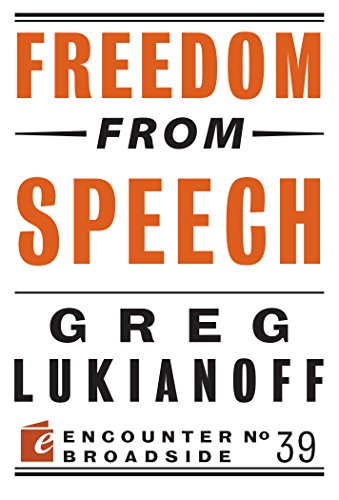
I spent a lot of my career banging on this drum saying, “It’s much worse than you think.” That was my first book, Unlearning Liberty. It was more or less saying, “This is worse than you think.” That being said, in 2012 it seemed like things were on a positive trajectory. Things were getting better. The cases weren’t quite as ridiculous, which is one way to tell how good or bad your speech environment is. Somehow right around 2013, 2014, right after my book came out, we started seeing seemingly overnight this sudden push among the students to demand that speakers be disinvited. Not just, “I don’t want to hear this person and I’m going to protest outside their speech,” but, “I don’t want them setting foot on my campus.”
That’s when you start hearing about things like trigger warning requests and micro aggression policies. That’s when you start seeing the students taking themselves to the streets to be, in some cases, mob sensors, shouting people down, for example. This was not what I was used to and that seemingly happened very quickly. I wrote a short book and it’s one of the better things I’ve written in 2014 when this was all brand new to me called Freedom from Speech. It’s only about 9,000 words, but it’s me just explaining how I think freedom of speech is endangered by progress itself. What I mean by that is you as a society and you as an individual, as you get to have more technology and get to have more options in who you talk to both online and offline and live in communities that better reflect your values, you can physically move to areas that have more like-minded people. This is going to necessarily have a negative effect on freedom of speech because people who are in these echo chambers or people who are in these environments that sounds wonderfully pleasant to be like, “I’m going to live in communities where they reflect my values. I’m going to join internet communities that also reinforced my values.”
There’s a problem with that. The social science is very clear that when you just talk to people with whom you agree politically, for example, you tend to become much more radicalized in the position of the group. If only out of weight of argument that you know for your side and not for the other. I made the argument in Freedom from Speech that this is going to get worse and it’s going to be a condition of wealth and of progress. That was Freedom from Speech. Then in 2015, I had the pleasure of writing with my then very new friend, Jonathan Haidt. He is a famous and brilliant social psychologist who wrote two wonderful books, The Happiness Hypothesis, which is about taking a scientific approach to what makes people happy and trying to figure out which does. Short observations like don’t live by the airport and try to limit your commute, those are very robust findings. Then two things that came out very strongly were meditation and CBT, Cognitive Behavioral Therapy.
That’s why I wanted to talk to Jon back in 2015 about this idea I’ve been thinking. I’m very open about this in the book. It comes from getting very depressed back in 2007. I always had issues with depression in my life, but this was going to the hospital bad, which was the first time I ever had to go to the hospital. What got me out of that, which forever changed my relationship to my own depression, and I always want to be clear, I also took medications. I was criticized by someone saying like, “You don’t talk about medication.” I’m like, “Absolutely, talk to your psychiatrist. Get help. Talk to your doctor right away.”
CBT for the long-term was the thing that helped me. CBT is more or less learning some of the crazy exaggerations everybody’s brain makes like when you go on a date and it doesn’t go well and you’re like, “I’m going to die alone.” That’s a cognitive distortion because from this, you don’t know you’re going to die alone. This is just a crazy exaggeration that most people make. These include things like binary thinking: everything’s going to be all good or all bad, fortune telling. This idea of, “I’m going to die alone, catastrophizing. If I get a C on this paper, I’ll never get into Princeton or whatever.” These are all ideas that you have to learn to talk back to and it takes a lot of practice. If you get yourself in the habit of talking back to the sad and crazy and depressed voices in your head, they start having a lot less power over you. I still got depressed sometimes, but I now can fight back in a way that I never could before.
You’re talking about the spectrum of emotions or the spectrum of feelings. It’s interesting and I think this is what you’re alluding to but experiencing that is instrumental to growth and learning. You talked a lot about in the book safety-ism and protectionism. Those types of experiences, when there’s so much pressure there that you need to figure things out. It teaches you so much. At the same time, as you’ve been speaking, it’s one of those natural tendencies that we have to want to be saved. It’s in Maslow’s Hierarchy of Needs.
You want safety and people find safety in a lot of different things. When there’s a group of people that believe the way that they believe, and think the way that they think, they may come with thoughts and align with people with the same thoughts. Then when it’s there, it becomes so strong because the numbers or the collective is magnified, where something that’s different, it’s difficult to cope with that. At the same time, are you making the point that those difficulties, the experience of other point of views or things that are disruptive are in fact healthy and beneficial?
My thinking on education overall is a lot of education is learning to overcome some of our worse nature. Some of it is our desire for comfort, our desire for affirmation. It can come up with some serious negative side effects. Even my horrifying depression, after the fact, I realized that I was anxious about taking the job as President. I was formerly the Legal Director of FIRE and I loved that job. It was a lawyer’s dream come true to be that. I was very anxious about becoming President, partially because I didn’t know if I could take it. You’re in the culture world all the time. It’s nasty and I was afraid I might have a breakdown. Then in 2007 I had one and then I got over it. I felt that fear of what I was capable of had put a cap on the possibilities for my entire life. That was lifted, which I paid a horrible price for. It was really difficult. At the end, it’s hard for me not to see that as something that I had to eventually work through or spend the rest of my life, always a little bit afraid of my own fragility.
Do you associate that as the driving force behind why there are issues on college campuses, why you have helicopter parents is just irrational sense of fear?
Free Speech: There are a lot of things that we should never take for granted. Right at the top of the list is free speech.
An exaggerated sense of fear, which is some are irrational at least. I’ll explain a little bit more about how the thought process happens. I’m working on college campuses trying to overcome my own depression and anxiety by teaching myself, don’t over generalize, don’t catastrophize, don’t personalize, don’t do all of these things that we talk about in the book. We have a list of cognitive distortions in the book that are super helpful. I was looking at what was going on a campus being like, it seems like administrators are constantly telling students, “You should catastrophize and personalize. You should do all these things.” I’m like, “This is going to make people depressed and anxious.” At the time I was saying to myself also, “Thank goodness students aren’t buying it.”
They’re not listening to it and so far it doesn’t seem to be having much effect on them. Then in 2013, 2014, it got a lot worse. It’s not unheard of for students to come out against freedom of speech. This happened in the late ‘80s and early ‘90s as well. That was the first-grade age of political correctness, where most of us remember that term from. At the time they were mostly talking about things like bigotry and racism and all this stuff. That was certainly still part of the argument in 2013, 2014, but the emphasis was very much on psychology. That this person, if they come onto campus, it’s not just that I’ll hate the fact that they’re there but I, or more importantly my fellow students, will find it psychologically harmful in a real medical sense for that person to be on campus.
I’m a psychology hobbyist to be like, “That doesn’t sound right. I should definitely get a sanity check from my friend, Jonathan Haidt about this.” I told them this idea about how it seems like we’re teaching cognitive distortions. To my delight, he said, “Let’s write an article about it.” I’m like, “Sure, I’d love to write an article with you.” This is back in 2014, right around the time that I was publishing Freedom from Speech. We published an article in The Atlantic called The Coddling of the American Mind. I didn’t love the title because it sounded insulting to students that I was trying to reach, but to give you a sense of how it was probably the right title to go with, my preferred title was Arguing Towards Misery which everybody we hear, it’s like, “That is boring.” We talk about micro aggressions. We talk about trigger warnings and about how this seems to be teaching students not to get over there if it hurts, not to confront ideas that make them uncomfortable.
We’re giving them a whole battery of things, which we said that’s a formula for making people more depressed and more anxious than they already are. We published the article, expecting to be beheaded because we were saying stuff that if you said on a campus would probably at least get you called to an office somewhere. We said it in The Atlantic and instead the response was shockingly positive. There was one person who wrote an article saying, “Her brother had killed himself several years ago and she was in a classroom where nobody knew that.” The story included someone jumping off of a building, which is where her brother committed suicide. It’s horrible. She said, “It was also the first time that anybody treated me not with kid gloves. Nobody stared at me.” Nobody censored it and it was the first time she felt normal in years.
I know that feeling when you’re like, “Please don’t treat me different. I need to just feel normal.” Some of those outpourings meant a lot to me. Jon and I were like, for a while there was a second most read cover story in the history of the Atlantic. We felt like we’d done our jobs and as I jokingly say, “We curate the whole problem.” We thought we were done with it. We thought we’d met our argument and it would go back to our other work. Unfortunately, everything got worse on the campus. We decided to write a book about it to go deeper most importantly under this question, what was so different about the entering class in 2013, 2014? What made this discontinuity so stark?
What was that epicenter? What was that ground zero of why that caused?
The whole book is dedicated trying to figure that out. The thing that made it certain that we had to do this research was because we had already agreed to do the book, but early on we started getting the data. At the time when we wrote the article in 2015, there unsurprisingly wasn’t a tremendous amount of data what the class of 2014 looked like, because it wasn’t ready yet. We started getting the data on the psychological profile of the incoming class of 2013, 2014 and the incoming class of 2015 and all the way up to 2016, and it was terrifying. You’re talking about self-reports of anxiety and depression tripling in some cases. Sometimes people are like, “This just means they’re more comfortable with it.” Also people being seen for anxiety and depression going way up. People say, “That just means that we’re responding to it more often.” I’m like, “Those are two big pieces of data right there that you’re dismissing.” The one that is undismissable though that’s not something that can be changed by definition is the saddest one: hospital admissions for self-harm and suicide.
We’re talking about if you look at the trajectory for young women from 2008 to 2016, 2017, 2018, the suicide rate doubled. Overall, if you take the entire first decade of this century and compare them to the last couple of years, it’s up around 70% for girls. The mental health crisis has been hitting boys less severely. We have theories about why that is in the book. The whole book is dedicated to figuring out how this happened. Definitely, when we dug into it, we left with a strong belief that social media was making a lot of existing problems much worse. Social media accelerated all sorts of things. It also accelerated polarization, which is another thread that we talk about as having been a contributing factor to making feel like there are either people who agree with me or evil people more or less.
When it came to the anxiety and depression, the correlation was definitely there. That extensive social media use and depression and anxiety were pretty well-correlated. Why this generation? When you work backwards, figuring out what would have made this class different. They were probably the first class heading school that were on social media with a phone in their pocket as much as they want it to be. They came of age at unfortunately the right time. What people are skeptical about, for example, why does it hit girls harder, it’s like if you have sisters. Imagine the worst aspects of junior high school, but then imagine them 24 hours a day.
I have two daughters in middle school.
If you can keep them off social media for a little while. As we dug more into it, there are even some researches indicating that the lack of deep sleep from being on your phone all the time might be a contributing factor as well. That’s one of the reasons why I say 24 hours, because that’s a nasty environment. When people are in these social media bubbles, they’re even worse about it because there’s none of that face-to-face element. They’ve got a cheering section more or less behind them. The people who agree with you become much more salient in your social media life than they would. Even if you’re in a room being nasty to someone, there’s one person who’s like, “You’re being jerks.” That’s enough oftentimes to check that behavior.
On social media, the dynamic can be much nastier. We definitely think that when it comes to the genuine increase in mood disorders, social media plays a big role. We think that made the polarization part of it worse. We also talk about new ideas about social justice becoming much more popular. We talk about intersectionality in the book. Intersectionality is a concept that we’re very clear on. We think there’s a lot of validity to it. In order to understand someone’s identity, you can’t just take the broad category. The person who first proposed this was more or less saying there are issues faced by black people and there are issues faced by women. It’s not quite right to think that the same issues would be faced by the combination of black and women.
That can be an entirely different category of problem or at least a very different nature of a problem. Jon and I both say we think she’s entirely right. The way intersectionality has been interpreted on campus is something that we call common enemy identity politics versus common humanity identity politics. We’re very in favor of common humanity identity politics. This is like in the great speeches of MLK. He comes to this over and over again where he’s not saying that we’re enemies. He’s saying that you should understand us as your brothers and sisters and that we deserve the same dignity and rights that all of you have enjoyed and our founding fathers said, “We, the people enjoy this.” It’s incredibly morally compelling. It’s the approach that was eventually very successful in the gay rights movement and the women’s right movement as well. Just saying, “Calling us out is double standards,” and saying, “We deserve this too.” That’s very compelling and it broadens the definition of your society.
Free Speech: People who believe in their intersectionality should be the most critical of people who just use it to get out of arguments that they don’t like.
There’s something morally satisfying about it. Common enemy identity politics is more of what you’ll see on social media these days. When you see people talking about different intersections of privilege, to a large degree, they’re engaging in that. Then people are like, “You’re saying privilege doesn’t exist.” I’m like, “No, I’m not saying privilege doesn’t exist.” If your argument is effectively if you check off any of these boxes, I don’t have to listen to you. I have a quick rhetorical out of an argument with you. Unfortunately, that’s going to get abused and I haven’t. Sometimes I think people who believe in their intersectionality should be the most critical of people who just use it to get out of arguments that they don’t like.
If you follow the intersectionality, like the privilege theory down the rabbit hole, you realize pretty quickly that given all the tools that have come out of it, you can dismiss the opinions of 100% of the entire population of the species. That’s a very tempting argument thing to use rhetorically. Unfortunately, it doesn’t do anything to bring people together. It doesn’t do anything to make people feel happier about themselves or anything else. The other thing when I tried to explain what’s depressing about this ideology is because as it’s currently interpreted, it means that practically all of us, not us too but, most people on campus are both oppressed and oppressor. White men are merely oppressors, unfortunately. Almost everybody else. It is some combination of the two and it’s treated as if it is just a fact of nature and there’s nothing you can do to change it and it’s going to be this way forever.
It’s a fascinating topic and the relevance is clearly there with college campuses, but it’s everywhere. It’s throughout society. I read the acronym of FIRE, which the individual rights are big, that’s the meat in the middle. I can’t help but think that it’s the understanding of what the collective and a group is in a society, in a class versus an individual. It’s the mesh of that and the misunderstanding or just not the right view of what an individual is and what their rights are and then what a group is and what their rights are. I’ve at least tried to talk to my kids and my girls because they’re dealing with it daily now. I look at them wanting to fit in, them wanting to be part of a group.
They want to be liked and they find identity in that. However, there’s so much weight there as opposed to the actual individual they are, which is unique to them and celebrating that. It’s almost this pull between the two desires, the two driving forces, wanting to be part of a group but also recognizing that you are an individual. I think that’s where social media has been amazing, but it’s also been very destructive. Maybe the common theme is the lack of understanding when it comes down to what an individual is, what their rights are, what a group is and what their rights are. Are you following that? Does that have relevance to how you’ve written about these things and potentially with some of the solutions are?
One of the reasons why we have individual rights in our name is not just because freedom of speech and due process are our individual rights. When Alan Kors and Harvey Silverglate were thinking about these issues going back to the 1980s and ‘90s, there was a sense that individual rights was a dirty word almost because more of the idea is this group rights idea, that having a better concept of group rights would somehow set us free or make us more progressive or something like that. The thing I was trying to explain is that individual rights protect group rights. If you have the right to decide what group you can join is entirely within your rights to decide. The primary way you evaluate yourself is by your membership in whatever particular group.
It has to be left up to the individual to also say, “I prefer not to make the dominant part of my self-identification to be my race or my economic background or any of this stuff.” Someone who’s free to identify themselves more as a Mormon for example or for that matter as an Atheist. The problem with group rights is it takes that freedom away from individuals and treats them like automatons. More or less like, “Here’s your leader. Good luck with that.” It makes it very hard to be a dissenter. If you look at the way we argue on campus, take a contrarian like Glenn Loury at Brown University. He’s a black professor who a lot of times will be the one leading the charge against silly expressions of political correctness.
For that, he gets treated with a lot of cases like some trader. Now he’s old enough that he just doesn’t care anymore, which is one of the nice things about getting older. It is interesting because it speaks to this idea. I haven’t written about this yet, but I call this the perfect rhetorical fortress. If you look at all of the things that colleges have excelled at from the 1980s on, it’s using a lot of IQ power to figure out a series of defenses that mean you never have to have an argument with somebody ever again or at least never have to listen to someone that you disagree with. It was simple enough when I was in school, if you could dub someone conservative, you didn’t have to listen to them anymore. That was even back in the ‘90s and that’s surely primitive and silly, but it was weird. I hate to say it was even effective on me in some cases and I’m not ashamed of that. As you go on, you start seeing the privilege ideology does allow you to dismiss at least 99% of the entire population of the planet, if not more.
Then you add things like class and economic privilege and Conor Friedersdorf wrote about this, he calls them The Idioms of Non-Argument, assuming bad motives. Congratulations, you have multiple defenses that allow you to dismiss without addressing the substance of their argument of every single person you ever meet that you disagree with. The wonderful trick is you don’t have to use that for anybody you agree with. It could be the whitest richest person in the entire world, but you don’t have to dismiss them and you wouldn’t probably want to if you 100% agree with them. This is a strong reminder that when people had all these rules about argumentation, about trying to address the substance of someone’s argument, that’s in the face of our natural inclination to find some other dodge, some other way to get out of it. That doesn’t mean I have to have this unpleasant experience of an argument.
That’s the biggest opportunity for growth. I’ve had hundreds of employees over the years and I’ve had tons of hardships and meltdowns years ago. A lot of what we’re talking about, I’ve thought through a lot and discovered certain things here and there, but we have a saying now which has become one of our values, which is “It doesn’t matter who’s right, it’s understanding what’s right and the discovery of what’s right oftentimes comes about through facing the fear of being wrong.” There’s such a tremendous fear there because the people relate being wrong from the perspective of somebody else somehow it equates to something wrong with you and it’s not true. That’s where I look at it.
It’s the opportunity to grow and because of society, that was a huge point that you made, which is society is changing daily. The groups are getting stronger and stronger because the sense of uncertainty is strengthening. At the same time, I think uncertainty is so beautiful because of how it lets a person make tremendous progress, groups to make progress. We have to face that fear of being wrong because everybody has that. That’s just the nature of life and humanities. We have quirks and nuances and things were not good at, but we have things we’re great at. That’s where the convergence of different personalities and strengths in individuals allows for incredible discovery. It dates back to the wars that existed since the beginning of time, which is this group versus this group.
I look at college and the education that past the point where a child is at their parents’ home and have a sense of safety and stability there. This is an environment where bodies are changing, minds are changing, they’re maturing. It could be an environment in which our future and the future of our society can be amazing and incredible. At the same time, I look at this clamp down on, it doesn’t matter what’s right. It’s, “I’m right and you’re wrong.” It’s been faced in history for how many hundreds of years and it hasn’t led to anything great. It’s only when those difficult things to talk about and they can only be talked about in the environment where people are okay with being wrong and want to discover what’s right. Right is where progress is made.
Kindly Inquisitors: The New Attacks on Free Thought
There’s this great book by Jonathan Rauch called Kindly Inquisitors that he wrote. Actually, Penn Jillette is a big fan of it. He did the audio book for the twentieth anniversary of Kindly Inquisitors a little while back. It’s all about something that when I first met with people, I have to explain this. It’s most of human history is what Rauch calls fundamentalist. He doesn’t mean that in a religious sense. He means that authority and truth come from the top down, whether from your chief or your oligarchs or your theocratic or pharaoh. That’s the way figuring out truth works. That’s most of human history. It’s a radical idea to start being like, “I am going to stop burning heretics. I’m going to stop making a loud mouse drink hemlock. I’m going to stop crucifying the people who say ideas that bother me.” All of these we have done to either dissenters or weirdos, burning them at the stake, beheading them, all of these things. We’ll weight the dissenter and ages past, not only will I tolerate that person, I’m going to listen to them.
It’s crazy and it’s a very hard social order to maintain. It doesn’t come naturally to us. With time, this approach has real advantages. It does undermine that comfortable certainty, I’ve talked about this in terms of Dostoyevsky, that I feel one of the messages throughout Dostoyevsky’s book is great human evil comes out of the desire to explain the meaning of life in ten words or less. Having that ideology, having that theory that you can always come back to, that frees you of the duty to think is very tempting, but there’s great evil there. Freedom of speech, hearing people you disagree with, none of this comes very naturally. Unfortunately, I feel like some institutions on campus are pushing us towards our more negative instincts on this that listen to the people you already agree with. In the book we have, people know about the Milo riots at Berkeley. I understand people not liking Milo Yiannopoulos. I’m not the biggest fan myself but it was an absolutely out of control riot in which there are people who were very badly hurt.
If you watch the videos of them being assaulted, you were like, “I can’t believe those people survived.” Being hit across the head with a twenty-foot flagpole. It was terrifying. We also talk about the Evergreen State University case involving Bret Weinstein. We got Pamela Paresky who is our chief researcher on this, went out and did some of the interviews on that. It’s much worse than I thought. Even sad incidents where a very respected young philosophy professor wrote a piece talking about the ideas of Rachel Dolezal, was the one who convinced everybody that she was black when she was actually a white woman and she became a President of local NAACP and worked for a university.
A professor wrote about this saying, “If we think that gender is more fluid and it’s up to you to decide what your gender identity is, why don’t we apply this to racial identity?” It was done in a very academic way and done in a very thoughtful way. We liken it to a witch hunt that it was a relatively small transgression and suddenly they’re demanding that the magazine withdraw the article, which is unusual. They’re recommending this person to be fired, this Rebecca Tuvel. What’s even more messed up about it was that some of the professors who had signed these circulated petitions saying, “Down with Professor Tuvel,” would contact her independently and say, “I’m sorry what’s happening to you.” That’s the dynamic of when a mob lost its mind. It’s like, “I couldn’t disagree with the mob.”
The mob is an individual. Here’s the individual apologizing. You can write volumes of books on all of these because as much as it applies to education, it applies to politics, the economy and business. One thing I’ve been thinking as you’ve been talking and making these points is the purpose of college is X. People go in with the expectations of these are the results I want to get by finishing college, which is getting a job, having a profession, figuring out what I want to do, but that’s the thing. It’s at the corporate world. With me, we’ve gotten to the point where we don’t look at necessarily colleges as a good thing sometimes.
We look at where they went to college and then their personality and how they fit within culture. If you have mob mentality or mob theory, it’s not good for a company. It could be in a sense if values are aligned. Most companies want creativity, they want strengths. They’d look at being able to combine multiple people with different perspectives and different backgrounds in order to accomplish a common end. If you reared with this mob rule, it’s difficult to fit into a company and it’s going to hurt going to certain colleges in a sense if you think about it.
Unfortunately, we’ve come to a very similar conclusion. I want to say this. I want to be very clear about this. I went to American University as a scholarship student. It was a school that I always felt some hostility towards it because they kept on chipping away at my scholarships even though I had very good grades and I’ll never forgive them for that. It definitely was a place that was less dogmatic than Stanford, where I went to law school. I always want to be clear, I received a world class education there. It was great. They were smart and interesting people, but now I do wonder, particularly for some of these elite colleges. I’ve said this flat out in some cases. We’ve had great luck hiring people from University of Indiana, from a lot of the big high-quality state schools.
I think that some of this dysfunctional ideology is less present there. A lot of these people don’t want to come forward, but I’ve talked to people who work for cause organizations like big legal representation organizations that do a good job of helping homeless people when they’re working on the side of the angels and all sorts of stuff. They’ll say candidly that they’ve been paralyzed by some of the expectations from the younger employees, from some of the elite schools because they’ve gotten so used to this very inward looking way of arguing that more or less assumes all of your allies are trying to oppress you. That’s not functional. If you end up having schools that are producing employees who are not able to look beyond their own personal drama that actually deliver to the greater good of what the company’s trying to do, it’s poison.
I know from personal experience when you were trying to run a professional shop, one disruptive person and particular if you don’t trust that person. That’s something that I’ve said to my employees a million times. I’m like, “We try to be very good to our employees. We try to find the people and keep them, but if I can’t trust you, you’ll be fired in a heartbeat.” It scares people first of all, but I’m talking about like, “Don’t lie to me. Don’t try to pull a fast one, because if I see that in your character, that’s not someone I ever want to work with again.” I’ve given two pieces of advice for people running businesses, be careful hiring younger people from some of these elite colleges. Also, my stock tip is if you can invest in human resources organizations, do. They’re going to have a lot of work in the next five to ten years.
There’s a segment, Simon Sinek is a big one, for the personal development space. It’s focusing on all of this. That’s where I’ve learned a ton because it’s like trying to work with somebody who doesn’t want to be wrong. They can’t be wrong. They are afraid of being wrong. It’s the worst thing in the world. There’s no progress that’s made, because justifications are in everything that doesn’t necessarily go as planned. It’s one of those things where I have kids and I understand the nature of coddling. I think about it all the time. I’m like, “I love these kids.”
I have a one-year-old and a three-year-old and I always say this. I want to be very clear. I’m not saying not coddling your kids is easy. It’s hard because that’s all you want to do. I just want to hug my sons and make sure that nobody ever makes them cry.
If you think about some harm coming to them, it’s like you want to break down walls.
There was a great book by Sara Zaske called Achtung Baby, which is about how the Germans are doing a better job of raising their kids in a free independent environment than we are. Everything’s switched in this respect. The home of Tom Sawyer and Huck Finn now has helicopter parenting whereas Germany, the classic or authoritarian culture at least in our imaginations have a strong societal commitment to raising independent and self-reliant kids. One thing that I thought was so important about that book though is it’s very easy to dismiss some of these cultural norms as just being a peculiarity of that culture.
That’s why it’s so great that Sara Zaske is the author of it, put in an interview with one of the German parents where they were like, “No, you don’t understand, this is very hard for us.” I want to run up and hug my kids and make sure that they don’t go off to the overnight slumber camp too early. They know it’s good for them and you have to value it as a society. You can do such great harm if you don’t teach children to think for themselves, to be independent and to be at least to some degree self-reliant. Arm them right down to their locus of control. Locus of control is a psychological idea. It’s very common sense. It’s like if you feel you have no control over your own life, it’s a great way and it’s a great formula for making people depressed and anxious.
This is the one reason why I don’t particularly love the title Coddling is because sometimes it gives you the idea of this spoiled pampered kid. When I think about a lot of these kids who were going to the elite colleges, they work very hard and they’ve been working very hard since they were very young. They’ve been scheduled from 6:00 in the morning, 10:00 at night for a lot of their childhoods. I think of the more very finely designed rocket that only knows how to do one thing, but then they show up on campus. We did a lot of interviews with Julie Lythcott-Haims who wrote this great book called How to Raise an Adult, which came out of her dealing with students who are incoming to Stanford, freshmen incoming. These sad scenes of this brilliant kid who’s constantly on the phone with their parents, asking them what to do and they don’t know how to do their laundry. They don’t know how to cook for themselves and all of these little things. They’re what make you feel like you can live your life on your own and be successful. They’re essential. They’re not little things.
No, they’re not. It creates a sense of confidence, a sense of certainty. There’s this idea of dependence and independence. We can talk about that for eons because that dates back to the beginning of time too. There are certain principles associated with it, but they absolutely apply to rearing kids. That comes down to what’s the result that you’re looking for. I can see how wanting to coddle, that desire, it’s the same desire as understanding, getting a child from this idea of dependence and independence. It’s the same desire. You want what’s best for you child, but it comes down to the same thing we’ve been talking about, which is they’re going to be independent at some point. There are ways in which you can create the environment so that they can experience some adversity. They can experience tension and pressure and learn from it. You can’t teach that. There are certain things that just have to be experienced in order to learn. There’s no app for it. You can’t go into YouTube and experience it.
Free Speech: If you end up having schools that are producing employees who are not able to look beyond their own personal drama and deliver to the greater good of the company, it’s poison.
Maybe VR, maybe you could experience it that way, but my point is there’s nothing that can replace that, which you’re figuring things out and understanding other perspectives and failing. This goes to Peter Gray, we’re talking about his Free to Learn where failure is a concoction of, in a sense, the school system because you look at failure and it’s like not doing something right is just, “I’m going to do it better next time.” It’s part of the process. Whereas failure is like “We’re done. I’m dumb and I can’t learn anything.” I look at the experience I’ve had in life and in business and with kids. I think there are principles that are old as time and you reference a lot of them in the book and they date back to Aristotle. They date back to Socrates.
These ideas that have existed and they apply just as much now as they did then. Sometimes these types of events were schools fail. They’re failing because they’re loading kids with debt. They should be more pissed at that. Instead of being pissed off at opposing points of views, they should be pissed off all the money they’re getting charged that they’ve got to payback one day. It’s the idea that it’s not sustainable. There’s something that’s going to grow and get worse and blow up. Sometimes those are the events. They like people to step back and be like, “That didn’t work. Let’s now learn from it and move on.”
I spend a lot of time thinking about how we can fix higher education because there are parts of it that I truly love. Practically every book I read or at least a big chunk of them are written by university professors who are talking about what they’ve been working on their whole lives. I’m very aware of the special role and a very positive role that higher education has. I also spend a lot of time thinking about, surely we can figure out less expensive, higher yield, better ways. Also, my being an employer at FIRE, we have about 50 people working for us at this point, has colored my view of all of this stuff. Trying to figure out what you want in an employee.
Also, I’m a civic guy. I’m also like, “What do we also want as citizens?” I think if you broke it down, calculus is fun. It’s an interesting intellectual puzzle. I’d take someone who has a solid grounding in statistics or has some amount of numeracy, they know roughly what population sizes look like and that stuff. That’s the kind of stuff you want people to know. We’re not doing a very good job of delivering any of this. One of the reasons why there is this disproportionate favoritism for the elite colleges is because the elite colleges get to be in the position of finding kids who are already bright and hard working. Then all they have to do is not ruin them by four years.
Some would argue that they probably do their best job at it or they can improve their thinking. A lot of times they’re going for hard science degree. Surely there’s got to be a better way. It’s not as if we’re going to get rid of higher education or that I even want to, but I think a lot of the worst excesses everything from costs to dysfunctionality would be addressed if people could finally start figuring out breaking the riddle of what would be a good competitive model for this. We all remember when Apple finally became a real threat to IBM’s dominance that suddenly magically all of our computers got a lot better. If there was something that was enough to make the academy anxious, we would see a lot of these problems get fixed quickly.
We should probably end with this. I want to talk about FIRE and how people can get involved. That’s a great example. That’s what competition often reads. There are signs of that. You have a lot of online like ASU, which is known as a very reputable school system as online this, online that. There are things that are going to be disrupting, but the tidal wave of kids not being able to pay back their student loans, that right there is going to be one of those catalysts. There are so much pressure and so much negativity that pushes the up and coming generations to realize that, “I’m not paying $150,000 for school. I’m going to go this route.” Hopefully, that manifests soon because it’s still getting more out of control.
FIRE, the Foundation for Individual Rights in Education. You can find out more about us at TheFire.org. We’re celebrating our twentieth anniversary. We’re doing a big event in New York City. We defend free speech on college campuses, all across the political spectrum. If you get in trouble on a college campus, we defend you. One thing that is very unique about FIRE and I do believe that things can be very unique no matter what grammar people say, is that we have people who vote for different people all across the spectrum. We practice what we preach and we have an office in which Republicans and Democrats and Green Party and Christians, Jewish people, Muslim people and Atheists all work together for common cause. We came out with our Ten Worst Schools for Free Speech list.
Free Speech: A lot of the worst excesses would be addressed if people could finally start figuring out breaking the riddle of what would be a good competitive model for this.
It always surprises people what ends up getting on there, because some of the cases are political correctness. People now understand that that’s relatively common. There are also cases where like at Rensselaer Polytechnic Institute. It’s like, “Could you please stop criticizing the administration? We don’t like this very much.” We see those stories all the time. If you have kids that are going to college, we provide Guides to Due Process and Fair Procedure that every student should read before they go on. It’s what to do if you find yourself in front of one of these disciplinary tribunals. We also have a Guide to Freedom of Speech that you can use, and if worst comes to worst and you get in trouble on campus, we’re very successful in getting students and professors who get in trouble out of trouble.
We’ll make sure to get those out on our social media so we can increase the awareness of what you guys are doing to impact what seems to be the ominous at this point.
Thank you. It was a real pleasure talking to you.
It was an awesome conversation. I really enjoyed it. Thank you.
Greg Lukianoff is an attorney, New York Times best-selling author, and the President and CEO of the Foundation for Individual Rights in Education (FIRE). He is the author of Unlearning Liberty: Campus Censorship and the End of American Debate, Freedom From Speech, and FIRE’s Guide to Free Speech on Campus. Most recently, he co-authored The Coddling of the American Mind: How Good Intentions and Bad Ideas Are Setting Up a Generation for Failure with Jonathan Haidt. This New York Times best-seller expands on their September 2015 Atlantic cover story of the same name. Greg is also an Executive Producer of Can We Take a Joke?, a feature-length documentary that explores the collision between comedy, censorship, and outrage culture, both on and off campus.
Greg has been published in The New York Times, The Wall Street Journal, The Washington Post, Los Angeles Times, The Boston Globe, and numerous other publications. He frequently appears on TV shows and radio programs, including the CBS Evening News, The Today Show, and NPR’s Morning Edition. In 2008, he became the first-ever recipient of the Playboy Foundation’s Freedom of Expression Award, and he has testified before both the U.S. Senate and the House of Representatives about free speech issues on America’s college campuses.
Love the show? Subscribe, rate, review, and share!
Everyone wants financial freedom, but not everyone is willing take responsibility to create one for themselves. Wealth strategist Will Street enlightens everyone on the importance of taking ownership of your finances. We can never be certain of the risk, but not taking the risk will not get you anywhere near financial certainty. Will shares stories of risks taken by investors and what we can learn from it. Failure is inevitable, but what makes a difference is rising up, learning from these failures, and having the will to continue the pursuit of financial certainty and happiness.
—
Watch the episode here:
Listen to the podcast here:
The Pursuit Of Financial Certainty And Happiness with Will Street – Part 1
Financial Friday
I’m here with my good pal, Will Street. How are you doing, Will?
I’m good. It’s been a while since I’ve been on a podcast.
It’s going to be a fun one because we’re going to talk about the context of some of the guests we’ve had on so far for Financial Friday. We’re going to review an article probably as a part two that is going to help us prove or hits home some of these points. I look at finance and I look at it from probably a different perspective than most and I think you’re starting to grasp that. You had the legal background and practiced in the financial sector as an attorney, which gave you a perspective and then being here for a few years now. You’ve worked with a lot of individuals personally, but you’ve also heard things about the situations of people when it comes to finances. It’s helped you fine-tune perspective when it comes to what financial success is and what it isn’t. Talk to that briefly. What have you seen as the reasoning behind what creates success for people financially? What gets them into trouble, gets them to make bad investment decisions or financial decisions?
Extreme Ownership: How US Navy SEALs Lead and Win
I finished reading the book, Extreme Ownership by Jocko Willink. I’ve read/listened to it. I had it and then I listened to the Audible version driving into work. The whole premise behind Extreme Ownership is you own everything. If there’s something within your sphere of influence, as a leader, he’s talking about it from the Navy SEALs perspective. You don’t cast blame on other people, you own it.
It’s your responsibility, your stewardship.
If something isn’t going right, don’t point fingers at somebody else. Look at what you could have done better to improve the outcome. To go back to your question, many people nowadays are passive when it comes to what they do financially. They assume that somebody else, whether it’s the government or Wall Street or businesses or whoever has their best interest at heart.
They’re competent to give them the advice that they should trust.
Things didn’t go well. Immediately, they look outward to try and cast blame on somebody else. My philosophy that has evolved over time is this idea that if I want to get somewhere financially or if a client wants to get somewhere financially, it’s got to start with us. It’s got to start with what we know, with what we understand, with what our objectives are and putting together a game plan to get there. It’s no one’s responsibility more than it is our own. That’s something that I didn’t understand the notion of Extreme Ownership in the beginning, but as people get into trouble it has to do with not taking an active role in what they do financially. Making assumptions that things will fall into place a certain way, that somebody else is looking out for their best interest and them not doing nearly what they need to do to take ownership of their own.
You’ve got to realize that all human beings, number one, we’re fallible. We all have opinion and we all have a perspective. Opinion and perspective can go hand-in-hand. Individuals tend to delegate responsibility to others, especially when it comes to things that they don’t understand. It’s easy. That’s the easy button. If they’re competent, they have experience and you don’t have to go through the trouble of learning everything, it makes common sense. That’s where most people get in trouble. What do you do? If you don’t have all the time in the world to study every single financial decision that you make, what’s the route that you take?
On this show, we’ve had individuals that represent a commodity type of investment. We’ve had Gene Guarino, who I’ve known for a long time. He has a new fund and investment in a cool niche part of the real estate industry. We’ve also had note investing guys in here. If you go to the Cash Flow Wealth Summit, the first presentation of Financial Fridays was my presentation at the Cash Flow Wealth Summit, which hits on a lot of this. We have the Hierarchy of Wealth, which helps to categorize where investments are. A lot of the categorization has to do with what you understand or the degree of certainty and control you have over whatever the financial decision is, whatever the asset is. In the Cash Flow Wealth Summit, we’ve had every type of real estate investing you can think of. We’ve had FlipNerd on and Mike Hambright on there. We’ve had Mobile Home. Andrew Lanoie was on as well for Financial Fridays.
These are all sorts of investment ideas, their perspectives, the little niches that people have and they’re presenting opportunities. You and I both know that there are a lot of opportunities out there that don’t end up the way that they were intended. That’s where I’ve tried to hit on this notion of instead of asking about the details or features and benefits of the actual underlying investment, it’s also to start to look into the business itself. The operations, the people involved because that’s where it starts to fall apart. There are some other things that you can do. That’s how I look at finances. I never try to discount anything.
When somebody claims or somebody says their perspective, I don’t say, “You’re right and I trust you,” I say, “That’s an interesting perspective and that’s valuable to me regardless of what the perspective is.” I start to ask some questions about it and verify if it’s a valid piece of advice if it’s a valid claim or not. That’s where we’ve used the three sides of the coin where you have heads, tails and the edge. Heads are one opinion, tails are the other opinion and then the edge is where you sit to make the most informed decision. As you’ve looked at investment opportunities and made financial decisions for yourself, what are some of the things that you do consistently that helps you make an informed decision?
The image that I have in mind is the Cash Flow Wealth Summit is this financial buffet of all different options and different strategies, tools, experts, companies and things like that. What a lot of people tend to do when it comes to their finances is they’ve got their tray and they take a little scoop of this, they take a little scoop of that. Then they get back to their table and then start to dig into it, but there’s no rhyme or reason to it. There’s no forethought given to what they’re going to do and how these various elements might interact with each other. It goes back to your point about everyone has a perspective. Everyone has some background, some knowledge and some familiarity with something. Everybody has somewhere to start. What I try to do is recognize that, “I don’t know everything, but I do know something. I know what my risk tolerance is. I know where my interests are.
I know generally where my goals and objectives are. I can start to put together a strategy that will start to point me in that direction as opposed to taking a little bit of this, taking a little bit of that, throwing it against the wall and hoping that something sticks.” Instead of taking that buffet approach, doing some analysis of, “What do I know? What am I drawn to? What am I interested in? Do I have any prior knowledge or experience or expertise with certain assets or asset classes or companies and starting to build from there?” I love the hierarchy because it does give us our blueprint for how to build our financial game plan. If we don’t have tier one established, if we don’t have the foundation securely in place, we’ve got no business jumping to the tip-top of the hierarchy. You’ve got to start it and you’ve got to continue it in the proper sequence.
Here’s how I look at it. It’s made me think about the idea and principle of certainty. It’s like human beings have this drive toward both certainty and uncertainty. Uncertainty is variety. It’s doing new things. It’s experiencing going on a roller coaster. We have this internal drive to do that. Sometimes, choosing from the buffet of financial options, it appeals sometimes to that internal drive. That’s why we’ve developed the Hierarchy of Wealth is because the foundation is certainty. That’s where we have certain characteristics and criteria. We teach the wealth maximization account and we use that for the characteristics that it has. Above that is when the degree of uncertainty sets in. There are three tiers above that. There’s tier two, tier three and tier four. In each level up, the degree of uncertainty increases. The idea is once your foundation is set, now it can properly balance the pursuit of this uncertainty, there’s a variety of different things that you may do. Let’s talk about tier two and tier three and some of the characteristics there. I’m going to use some examples as far as some bad decisions that I’ve made and also some bad decisions that I know clients have made, actual experiences. How do you look at tier two?
If I’m walking through the hierarchy with clients, which I do. The way that I explain it is where each layer, each tier that we’re building on top of the previous, there’s a little bit more risk or a little bit less control or a little bit less certainty with the previous. We don’t have a license to take on a bunch of uncertainty and give up a bunch of control if we don’t have the most secure, the most control and the least amount of risk established. For me, that’s that bottom layer. As we’re stepping into tier two and maybe it’s a little bit less certain, a little bit riskier and a little bit less control, I’m going to look at assets like real estate. Real estate’s a broad category in and of itself. For me, what I define as a good solid tier two asset would be the good buy and hold, three-bed, two-bath rental property. Going back to my own experience and my own expertise, my wife would tell you I have basically zero construction knowledge, expertise and ability. I’ll mess up an Ikea piece of furniture. That’s how bad I am.
In other words, I’ve got no business in a flip because I have no idea what needs to be done. I don’t know if it’s being done correctly. No clue, no concept. That is outside of my area of expertise, I understand buying a property. I understand what metrics to look at when it comes to rent relative to purchase price and some of those things. A good solid tangible asset like a piece of real estate or rental property is a fantastic tier two asset for me, or for somebody else, it might be starting a business. It’s something that you have control over. It’s something that you can impact. You’re not surrendering control to somebody else. You’re not leaving it up to chance. When you wake up in the morning, you’re not looking at the ticker and finding that, “The market is in the toilet now,” and you had no control. That’s not a tier two asset. We’re looking at something that might be a little bit less control, a little bit less certain and a little bit more risk than that bottom layer. We want to be careful about how much additional risk we’re taking on or how much uncertainty we’re moving into. At least that’s my philosophy.
Financial Certainty: A good solid tangible asset like a piece of real estate or rental property is a fantastic tier two asset. It’s something that you have control over.
I’m going to deviate. This comes to some stuff I’ve been thinking about. I don’t want to get into failures and some bad decisions that I’ve made and clients have made. I look at some of the events that occurred in the last couple of years. You had Robin Williams commit suicide. You had Kate Spade and Anthony Bourdain. There are others as well. The thoughts that I’ve had is here you have individuals, you have human beings who achieved what some people are after. People are after what they consider financial independence, financial freedom and to be at a certain level. To be successful here, to be successful there, to have a lot of money here and a lot of money there. I would argue that that’s financial freedom that might not be freedom. Tier two for me is a lot of investment in yourself. I look at where people are at and a lot of what they want to become independent from or free from. It’s something that they don’t like to do, but that doesn’t mean that you shouldn’t do.
I’ve joined an inner circle of Tony Robbins, which is called Platinum Partnership. I’ve been listening to a lot of his material. There’s something that hit me and he said, “For a fulfilling life, you have to spend between 50% and 60% doing meaningful things.” It’s the discovery that I don’t think most people ever venture to do. Meaningful things are something that drives you, something you’re inspired by, something that you know makes a difference and aligns with who you are, your talents, your abilities, your strengths. The discovery of that is part of tier two because one of the things is potentially starting a business. Retirement is an idea of escaping something. You stopped doing what you don’t like doing, but it doesn’t mean you shouldn’t do because a part of you dies when you’re not contributing. I look at the meaningful things that people do and what drives them and why they thrive. It’s not because they make a lot of money but because there’s another interest in it besides that.
Tier two is where you can take assessments. You can take StrengthsFinder 2.0. You can take Kolbe, DISC and Myers-Briggs. There are a number of them out there. The idea is to understand more about you. It’s also to dig deep and start to pay attention and put some glasses on where you can see the world and the things that you enjoy doing, the things that make a difference. It’s starting to pursue a business that revolves around that. If you look at tier two, some of the criteria are things that you have more control over, but still have an element of uncertainty. Real estate has that, but at the same time, there’s still a degree of control that you have especially with how you determine markets. How you determine rents and values. How you determine down payments. How you determine mortgage payments versus rents. It’s one of those things where it doesn’t take a rocket scientist to have a good piece of real estate. It’s somewhat passive.
You look at other investments to make. There’s an article that I wrote a few years ago and I mentioned the idea in the book, which is how to get a 10% raise for life. Most people get a 3% raise. If you look at a 30-year career, someone that makes $100,000 will earn shy of $5 million total earnings with a 3% increase yearly. If you make a 10% increase yearly, the earnings are almost $17 million. It’s a huge difference, a little over $11 million. What’s the difference between someone that gets a 3% raise and someone that gets a 10% raise? 3% raise is because of the cost of living. It’s standard. If you look at 10%, it’s because somebody has figured out a way to create more value in either that capacity or another capacity. They get a certification. They learn management. They learn leadership. They learn how to do marketing. They learn things that create more value for an employer or for customers. That’s the idea. That opportunity is available to everyone. It’s where you have the most control when it comes to taking risks or delving into the realm of uncertainty.
It’s one of those things where all of us can think about times where we’ve done something meaningful. Maybe it’s giving to a charitable organization or serving in some way. The feeling of invigoration that comes from that, it makes you fire on all cylinders. If you can start to make that a part of what you do as a matter of practice, how much more driven are you going to be to get out of bed in the morning to work harder, to be better, to produce more. Think about somebody who’s stuck in a job that they don’t enjoy and how deflating that is and demotivating and difficult life can be and unhappy. Flip that completely 180 degrees the opposite and you start to invest in yourself and to fuel what drives you. That’s huge.
Let’s talk about some failures. We’re hitting on things that we’ve hit on before. It’s going into the context of what’s the purpose of being financially successful? What’s the end result to escape or to support or help to buffer doing the most meaningful things according to what makes the biggest difference in your life and in other people’s lives? The failure side of things, I look at all the decisions you make. You want to have trustworthy people in your life, but at the same time you have to look back and say, “Everyone has fallibility.” They make mistakes. They make bad calls. Rarely is an investment opportunity going to tell you not to invest with them. You have to look at that and that essentially gives you the area in which you can ask questions. You can dig a little bit deeper. You can verify. You can check and use your financial education to make a decision. Oftentimes, that comes as the result of not doing it. You can say, “That guy sounds like a credible guy. I’ll write him a check.” These are mistakes that I made a number of years ago. This was probably 2004, 2005.
I remember I was invited to this person’s house. In Utah, there are two things that happen at people’s houses. The first thing is it’s like MLM or network marketing company. They try to have you sell the vitamins or the juices or whatever, or it’s some investment or business. I’ve been to both. I didn’t grow up here, but I learned whenever you get that call, “I have this business I did. You’re a business guy. I think you should come and attend.” It’s one of those two things. This was an investment one. The investment opportunity was a fish farm and they had this proprietary way to breed fish. It sounded cool and the name of the company that did it was Winsome. That should have been a sign. It was a $20,000 investment and I never saw anything from it. It was a group of people that was in Sandy. It was about 30 minutes away. It’s an investment that went bad. The actual fish farm existed, it’s just that they had nobody to sell the fish to.
What was cool was this guy went to prison. This was a few years after this occurred. It was right during the time where I had tons of different failure business-wise. I was called into an FBI office. There’s a building here in Salt Lake and in the building, there are three floors of FBI. I went in there and there were no signs or whatever. I go into a huge boardroom and there are people everywhere, plus there were people on conference calls. There’s this horseshoe thing and I come in. They asked me questions like, “How did you hear about this guy? What happened? How much did you invest? What type of communication did you receive from him?” It was an interesting experience. I learned more about what this guy did. It wasn’t just people in Utah. There were a bunch of other states.
It’s one of those things where every single person that gave this guy money and it was millions of dollars. It was done by trusting that he knew what he was doing. Nobody asked questions about, “Who are your customers? Do you have contracts? Can I see those contracts? Let me see the business plan. Who else is on your team? Who’s doing the marketing? Who’s doing the operations? You’re in Texas so who’s running the thing in Puerto Rico?” It’s one of those things where nobody was asking those questions. All the questions were, “What’s the rate of return? When am I going to get my money? Do I get it monthly? Do I get it quarterly? How much is it? Could I get more?” All had to do with the financial details, not the principles, the values and the operations. That was one of the more crazy investments that I heard of.
I’ll give one that will make everybody laugh. This was in 2018. We started getting lots of people who were interested in cryptocurrency. You’re talking to them and explaining the Hierarchy of Wealth and how to position assets. People started to tell us that they were refinancing their homes and cashing out everything and putting their money in Bitcoin. This was when Bitcoin was probably $18,000, $19,000. They were convinced that Bitcoin was going to $100,000 and that was going to be the key to their retirement. This is an example that sounds ridiculous, but it was happening a lot. It was a number of instances. There’s another one too, which is the Iraqi Dinar. This was probably a few years ago when we started to get these types of calls where people were like, “I’m coming into this large sum of money, which is to the tune of potentially $500 million. I need a place to put that.” I’m not going to get into the details of that, there’s plenty of information online. Individuals, the uncertainty that they’re in pursuit of is natural. It’s not like people wake up one morning and like, “I’m going to go pursue uncertainty.” It’s one of those natural drives that compel us to want variety. We realize that, but at the same time once you realize it you have to position things so that you don’t let that get in the way for making good decisions.
Financial Certainty: You want to have trustworthy people in your life, but at the same time you have to look back and say, “Everyone has fallibility.”
I would say there are a number of people I talked to that have lost money, lost investments and they value what we do a lot more than those that haven’t lost money, but at the same time, I look at that as a powerful tuition. It’s an investment and it’s an investment in your future. I got off the phone with a guy. He was a dentist. He was successful and made bad decisions. It costs him $500,000. He was like, “I want to make up for lost time.” I was like, “You didn’t lose time.” You gained time if you think about it because you learned some valuable lessons that are going to be essential as you expand your practice and as you raise your family and as you determine what your future looks like. You’re going to have so many financial decisions throughout your life, whether it’s purchase decisions, whether it’s investment decisions or whether it’s what you do with your career.
We advocate that having a foundation of certainty, which consists of financial education as well as certain assets and structure that allows you to buffer the uncertain decisions that you make. That’s where you start. It’s also to understand the values and the principles that underlie all of these decisions. Sometimes that’s the discovery of your strengths, your purpose, your mission, your calling and the pursuit of that meaningful work. We are going to be reviewing an article of a woman who studied 600 millionaires and she discovered where you choose to live has two effects on your ability to build wealth. We’re going to talk about that. We’re going to take the contrarian. Her opinion’s heads, this is tails. Stick with us until the next episode for the second segment of Financial Friday with Will Street. Thanks. We’ll see you in the next episode.
Will earned his Bachelor of Arts degree from Brigham Young University in 2005. After graduating from BYU, Will attended the University of Iowa College of Law and received his Juris Doctor in May of 2008. Will began practicing law with the law firm of VanCott, Bagley, Cornwall & McCarthy the oldest and one of the most well-respected law firms in the State of Utah. Will’s practice focused primarily on consumer finance-related litigation, consumer finance transactions, sale and purchase agreements, NDA’s, RFP’s, teaming agreements, security agreements, creditor’s rights in bankruptcy, and estate planning. Working directly with clients to analyze a problem, develop a solution, and working to ensure a successful resolution are what Will enjoyed most about being an attorney. Will comes to Paradigm after nearly six years in the private practice of law.
After his exposure to the Infinite Banking concept and seeing that his legal training would be directly relevant to his role at Paradigm, Will made the decision to leave his practice. Paradigm allows Will to continue to do what he enjoys most – develop client relationships, dissect problems, create solutions and work collaboratively with the client towards a successful resolution. Originally from the Tri-Cities area of Eastern Washington, Will currently resides in Salt Lake City with his wife, Sunny, and their three children.
Love the show? Subscribe, rate, review, and share!
Patrick is the President and CEO and started Paradigm Life in 2007 after learning from his mentor Kim Butler about financial strategies outside of Wall Street.
With a background in economics and marketing, Patrick immediately realized the opportunity to teach investors, business owners, professionals and families on a large scale using modern digital media and communication technology. Since 2007 Paradigm Life has worked with thousands of individuals in all 50 states.
Want to learn cutting edge investment strategies that the wealthy use?
Sign up below, and we'll send you the latest episodes right when they're released.
Never miss an episode.
AWESOME. YOU'RE ALMOST IN...
An email is on its way from me to you. You need to confirm your email address.
I've also sent you a link to a free chapter of my latest book Heads I Win, Tails You Lose (audio and PDF version.) Go ahead, check your email right now.
Run-of-the-mill advice is everywhere. But in order to achieve different results, your strategy has to be different.
In this book, you're going to learn about a hundred year old strategy that's tried and proven to give results. Are you ready to
shift the way you think about investing?
WHAT THE PROS ARE SAYING...
Once in a great while, a person comes along who can explain financial concepts so clearlu that all of a sudden,
what had been a mystery becomes obvious. For many people, Robert Kiyosaki was that person when he wrote Rich Dad Poor Dad. For me,
that person was Patrick Donohoe when he first explained what you're about to learn in this book.
Tom Wheelright, CPA
Author of Tax-Free Wealth, of the Rich Dad Advisor Series
"Patrick's book explains why every American is experiencing worry, fear, and uncertainty with thier finances.
'Heads I Win, Tails You Lose' outlines a better way to take back control and live a life you love."
Mike Dillard
Entrepreneur, Author
"Storyteller, man of honor, humble seeker of truth - these are the words I think about when Patrick comes to mind.
I've been looking forward to this book for quite a while and am pleased to tell you, the reader, it is worth the wait."
Kim Butler
CEO, Partners for Prosperity
"Patrick is someone that I call upon to learn the strategies of the world's richest people. 'Heads I Win, Tails You Lose' provides
a creative approach for managing wealth outside of the old and tired methods used by everyone else."
Ryan Moran
Founder of Capitalism.com
AMAZON REVIEWS
Book Nailed it
A should-read for anyone looking to be smart with thier money, and smart enough not to just follow the herd.
Robert K. Cunningham
Very enlightening and actionable!!
If you want a real path to Economic Independance and not a theory this book is for you.
Curtis May
Wise if I read this years ago.
Great book, made me change my thinking on my investment situation.
Justin Schmidtke
Take back control of your money
The truth about money. You will be surprised with the information. WOW!
Thomas Young
A must read
Outstanding book. Details information most people are not aware of in creating a sound financial programs.
Kenneth Burton
...a critical financial strategy
I simply couldn't put this book down, I read it cover to cover in 1.5 days! #VeryEngagingRead
Wes Atchison
ABOUT THE AUTHOR
Patrick Donohoe is the Founder and CEO of Paradigm Life and PL Wealth Advisors. Patrick and his team teach thousands how
to build wealth, create lifetime cash flow, and leave a meaningful legacy.
Patrick was recently honored by Investopedia as one of the Nation's Top 100 Most Financial Advisors. He is a highly sought
after presenter and speaker at financial-based events around the country and is the host of The Wealth Standard podcast.
Patrick grew up in West Hartford, Connecticut, and attended the University of Utah, where he received his bachelor's degree in economics.
He lives in Salt Lake city with his wife and three children.
WHAT'S INSIDE THE BOOK?
THE CHAPTER LIST:
1. ORIGINS OF THE AMERICAN DREAM
2. THE PERPETUAL WEALTH STRATEGY™
3. QUESTION EVERYTHING
4. BREAK AWAY FROM WALL STREET
5. AVOIDING THE INVESTING AND LENDING TRAP
6. THINK FOR YOURSELF
7. A SOLID FOUNDATION
8. B ELIKE THE WEALTHY
9. MYTHS AND TRUTHS OF INSURANCE
10. SAVE, BORROW, INVEST, AND BUILD WEALTH
11. START, BUILD, AND PROSPER YOUR BUSINESS
12. YOUR FINANCIAL FUTURE
13. MAKE THE SHIFT
14. TAKE BACK CONTROL
Heads I Win, Tails You Lose
by Patrick Donohoe
Free Chapter Download
×
LEARN HOW TO MAKE YOUR MONEY GROW.
The 100+ year old investment strategy proven and used by the wealthiest of the wealthy.